

Search
Primary tabs
Search
Your search for "weather" gave back 164 results.

Primary Topic:
Subtopics:
Type:
Keywords:
Summary:
This short animation from the Community Collaborative Rain Hail and Snow Network shows how decision makers use a variety of data and in-person reports to assess the drought conditions across the United States.

Primary Topic:
Type:
Keywords:
Summary:
Students will analyze surface temperature and solar radiation data to construct explanations about the relationship of seasons and temperature to the amount of solar energy received on Earth’s surface.
Primary Topic:
Subtopics:
Type:
Standards:
Keywords:
Summary:
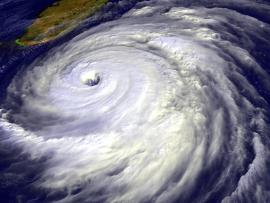
Teaches about what a tropical cyclone is, and how "Hurricane", "Typhoon", and "Cyclone" are all different words for the same phenomena.

Primary Topic:
Subtopics:
Type:
Summary:
For the first time in 360 degrees, this data visualization takes you inside a hurricane. The precipitation satellite has an advanced radar that measures both liquid and frozen water. Click and drag to look around.
Primary Topic:
Subtopics:
Type:
Keywords:
Summary:
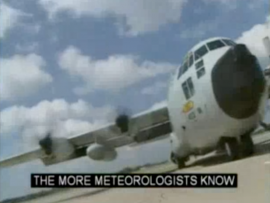
This NASA video segment focuses on how scientists use satellites to collect data. These sets of data are then analyzed and used to predict storms.

Primary Topic:
Subtopics:
Type:
Summary:
Learn all about hurricanes, the most violent storms on Earth.

Primary Topic:
Subtopics:
Type:
Keywords:
Summary:
How do hurricanes get their energy? NASA hurricane scientist Dr. Jeff Halverson explains how hurricanes draw energy from the ocean surface.

Primary Topic:
Subtopics:
Type:
Summary:
Students will use various visualizations (i.e. images, charts, and graphs) to explore the energy exchange that occurs when hurricanes extract heat energy from the ocean.

Primary Topic:
Subtopics:
Type:
Keywords:
Summary:
Learn how NASA uses a data-collecting sensor, Clouds and Earth’s Radiant Energy System, or CERES, to study clouds and make accurate measurements of energy leaving Earth.

Primary Topic:
Subtopics:
Type:
Summary:
In this lesson, students will learn how to compare data displays related to tropical cyclones to identify patterns and relationships in the data. They will be able to create their own data displays or use the ones provided.