
GPM

Content which is affiliated solely with the Global Precipitation Measurement Mission.

GPM Power Positive, Stable, and Communicating

The GPM spacecraft is power positive, stable on the sun line and communicating with the GPM Mission Operations Center (MOC) at NASA Goddard Space Flight Center in Greenbelt, Md. The GPM flight control teams at NASA Goddard are studying a situation with the spacecraft where the satellite is gaining a small amount of rotational momentum. In a normal state, there are environmental forces on the spacecraft that are corrected by the momentum wheels and magnetic torquer bars. At this time, the momentum wheels are being used more than expected. This situation does not pose any threat to the health of
 NASA & JAXA Launch Satellite to Measure Global Rain and Snow
The Global Precipitation Measurement (GPM) Core Observatory, a joint Earth-observing mission between NASA and the Japan Aerospace Exploration Agency (JAXA), thundered into space at 1:37 p.m. EST Thursday, Feb. 27 (3:37 a.m. JST Friday, Feb. 28) from Japan. A Japanese H-IIA rocket with the NASA-Japan Aerospace Exploration Agency (JAXA) Global Precipitation Measurement (GPM) Core Observatory onboard, is seen launching from the Tanegashima Space Center in Tanegashima, Japan. Image Credit: NASA/Bill Ingalls The four-ton spacecraft launched aboard a Japanese H-IIA rocket from Tanegashima Space...

GPM Launches from Tanegashima Space Center

GPM Launches from Tanegashima Space Center
Image Caption
GPM Launches from Tanegashima Space Center

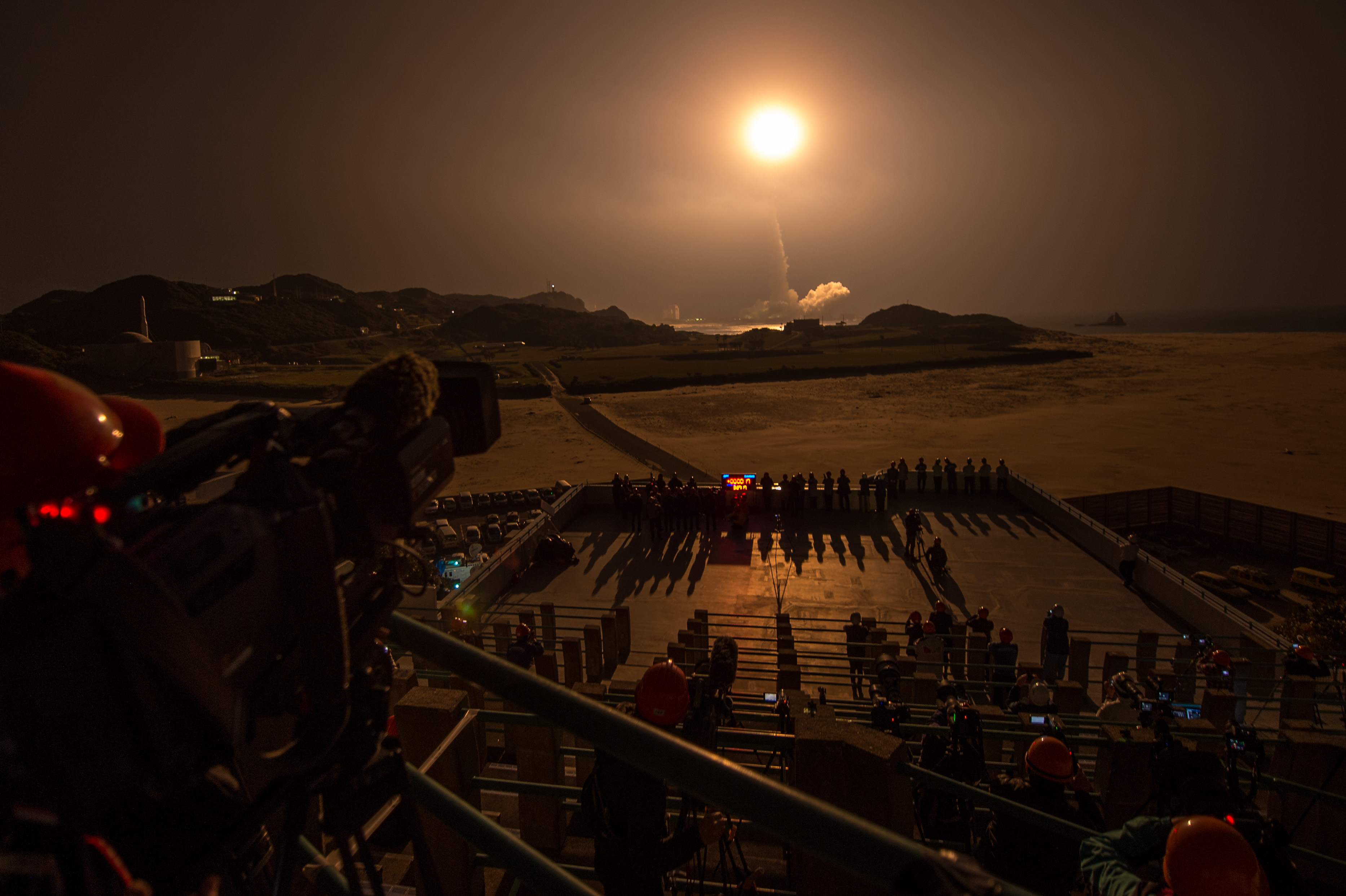
A Japanese H-IIA rocket with the NASA-Japan Aerospace Exploration Agency (JAXA), Global Precipitation Measurement (GPM) Core Observatory onboard, is seen launching from the Tanegashima Space Center, Friday, Feb. 28, 2014, Tanegashima, Japan. The GPM spacecraft will collect information that unifies data from an international network of existing and future satellites to map global rainfall and snowfall every three hours. Photo Credit: (NASA/Bill Ingalls)

GPM Launches from Tanegashima Space Center

Submitted by JacobAdmin on
Video Embed

A Japanese H-IIA rocket with the NASA-Japan Aerospace Exploration Agency (JAXA), Global Precipitation Measurement (GPM) Core Observatory onboard, is seen launching from the Tanegashima Space Center, Friday, Feb. 28, 2014, Tanegashima Space Center. The GPM spacecraft will collect information that unifies data from an international network of existing and future satellites to map global rainfall and snowfall every three hours.

GPM Liftoff

GPM Liftoff
Image Caption
GPM Liftoff
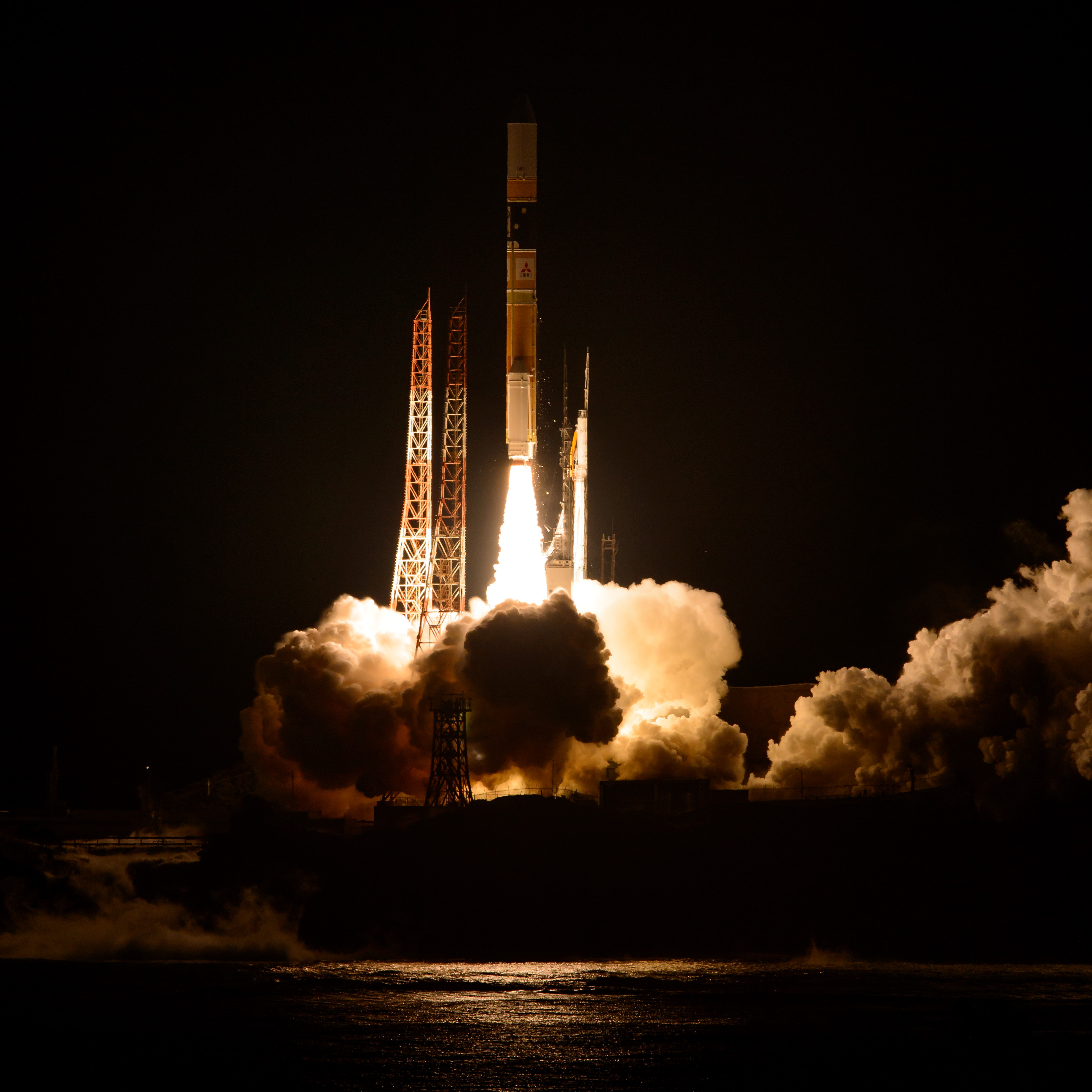
A Japanese H-IIA rocket with the NASA-Japan Aerospace Exploration Agency (JAXA), Global Precipitation Measurement (GPM) Core Observatory onboard, is seen launching from the Tanegashima Space Center, Friday, Feb. 28, 2014, Tanegashima, Japan. The GPM spacecraft will collect information that unifies data from an international network of existing and future satellites to map global rainfall and snowfall every three hours. Photo Credit: (NASA/Bill Ingalls)

GPM Power Positive

The GPM Core Observatory has successfully deployed its solar arrays and is stable and pointed at the sun. GPM’s solar arrays are pointed at the sun and collecting power. We have confirmation that the arrays are rotating properly, charging the batteries and providing power to the spacecraft.

Solar Array Deployment Begins

Solar array deployment begins. GPM has two arrays to power the spacecraft because of its orbit. It circles the Earth at an angle slanted 65 degrees up from the equator. This means it does not cross the equator at the same time every day – an advantage for monitoring rainfall at different times of day and night.

GPM Liftoff and Seperation

1:55pm EST, 2/27/14 We have spacecraft separation! The GPM Core Observatory is flying on its own in orbit. The bolts holding it to the second stage sucessfully severed and the second stage has separated. The GPM spacecraft is flying on battery power until its two solar arrays deploy shortly. 1:52pm EST, 2/27/14 The nosecone fairing that protected the GPM Core Observatory through the atmosphere has safely separated and fallen away. 1:47pm EST, 2/27/14 The GPM Core Observatory has begun transmitting telemetry on to Mission Operations Control at Goddard Space Flight Center in Greenbelt, Md. 1

Second Flight Attitude Control Test Completed

A second scheduled test of the guidance and control system on the H-IIA launch vehicle has been completed to confirm that all devices for flight attitude control are working as expected. NASA Television has begun coverage of the GPM Core Observatory launch originating from Goddard Space Flight Center in Greenbelt, Md. Watch online at: http://www.nasa.gov/nasatv