

GPM

GPM content

First Images from GPM
First Images from GPM
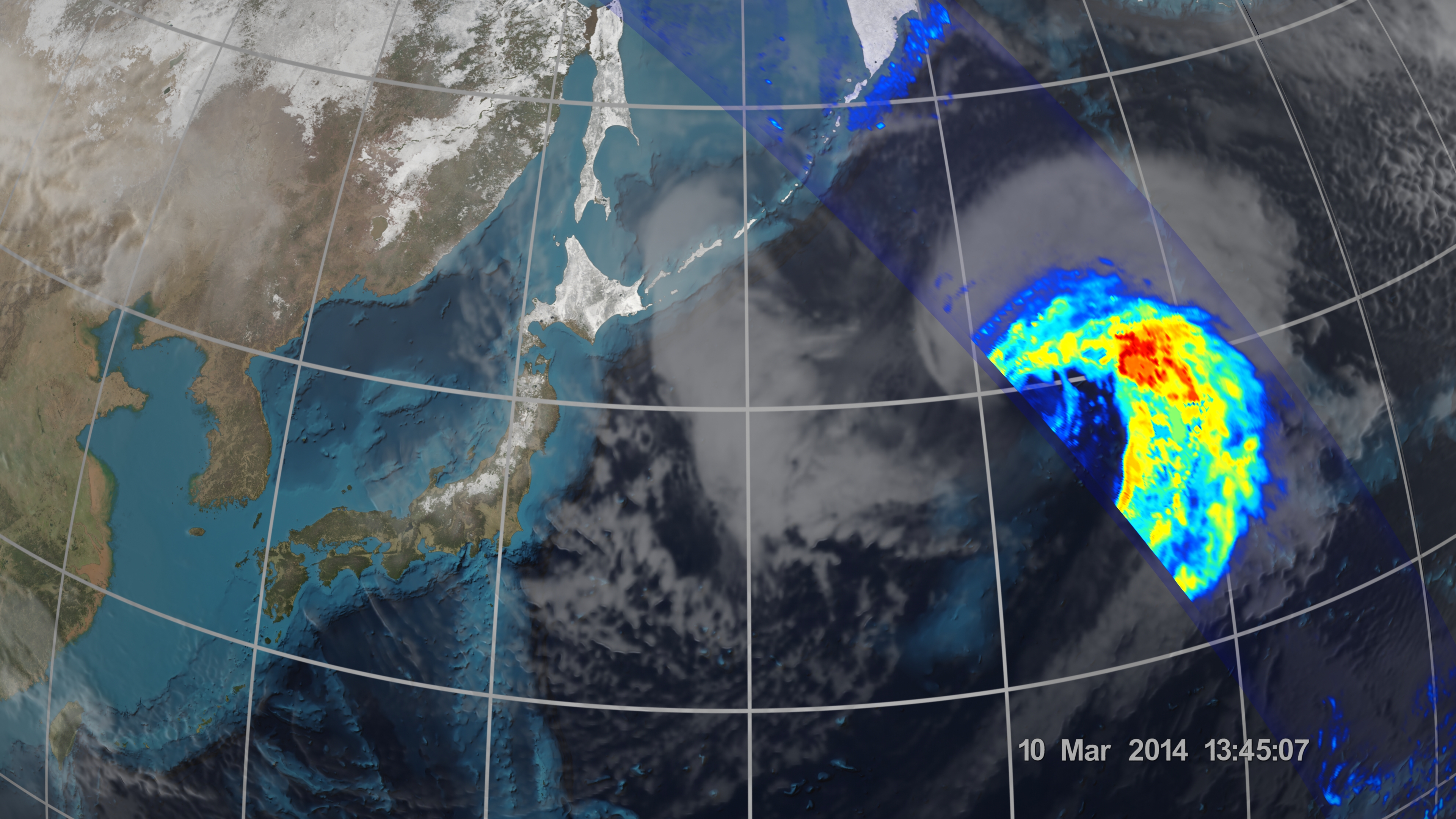
Image Caption
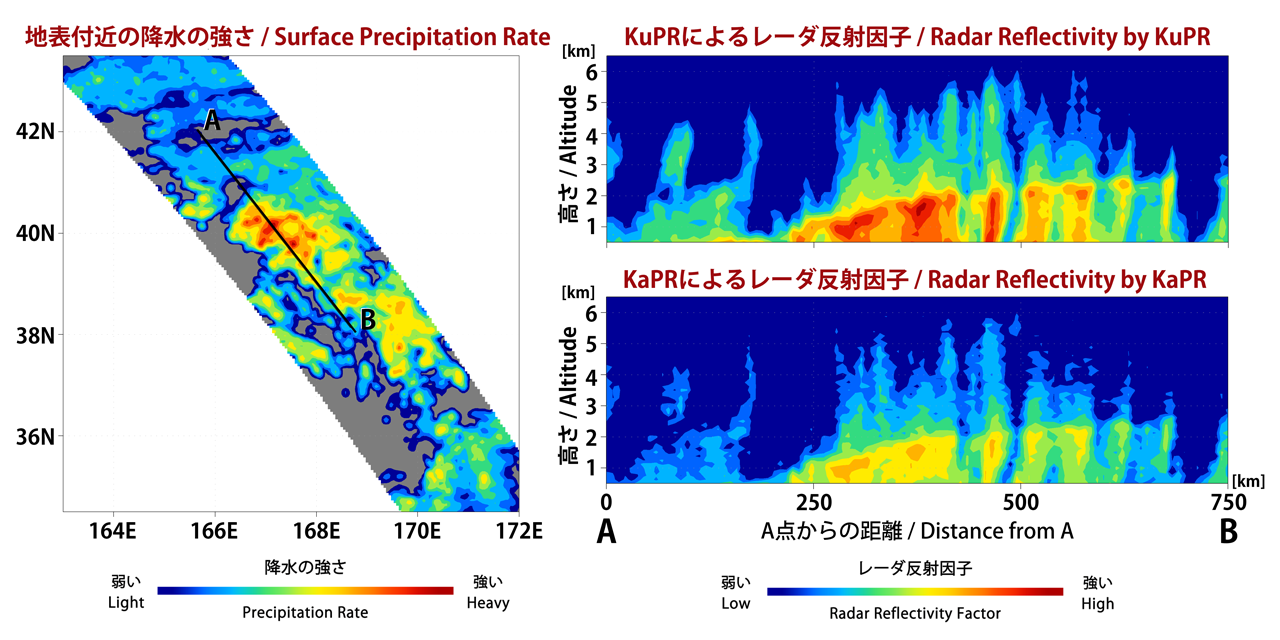
The Dual-frequency Precipitation Radar observes rainfall and snowfall that occurs within clouds in three dimensions, across the surface of the Earth and upward into the atmosphere.
An extra-tropical cyclone was observed over the northwest Pacific Ocean off the coast of Japan on March 10, 2014. 
 
The graph on the left shows the extra-tropical storm seen by the DPR as the satellite passed overhead. The x-axis is the east-west longitude and the y-axis is north-south latitude. The colors show the rain rate at sea-level, with more intense rainfall represented by red and lighter precipitation shown in blue.

First Images from GPM

First Images from GPM
Image Caption
On March 10, the Core Observatory passed over an extra-tropical cyclone about 1055 mi (1700 km) due east of Japan's Honshu Island.

The storm formed from the collision of a cold air mass wrapping around a warm air mass, emerging over the ocean near Okinawa on March 8. It moved northeast over the ocean south of Japan, drawing cold air west-to-east over the land, a typical winter weather pattern that also brought heavy snow over Hokkaido, the northernmost of the four main islands. After the GPM images were taken, the storm continued to move eastward, slowly intensifying before weakening in the central North Pacific. 

Learn More

First Images from GPM Dual-Frequency Precipitation Radar
First Images from GPM Dual-Frequency Precipitation Radar
Image Caption
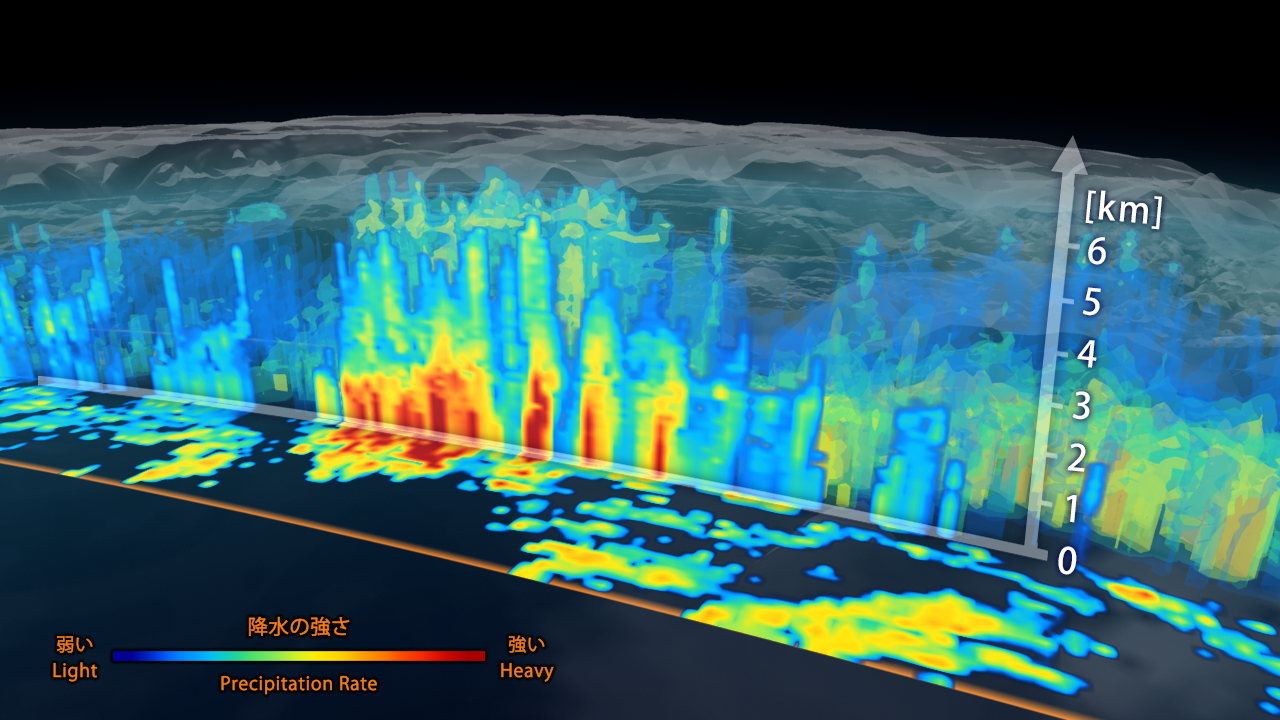
3D view inside an extra-tropical cyclone observed off the coast of Japan, March 10, 2014, by GPM's Dual-frequency Precipitation Radar.

First data visualization of the three-dimensional structure of precipitation collected by the Dual-frequency Precipitation Radar aboard the Global Precipitation Measurement (GPM) mission's Core Observatory. The image shows rain rates across a vertical cross-section approximately 4.4 miles (7 kilometers) high through an extra-tropical cyclone observed off the coast of Japan on March 10, 2014. The DPR 152-mile (245 kilometers) wide swath is nested within the center of the GPM Microwave Imager's wider observation path.

First Images from GPM Microwave Imager
First Images from GPM Microwave Imager
Image Caption
First Images from GPM Microwave Imager

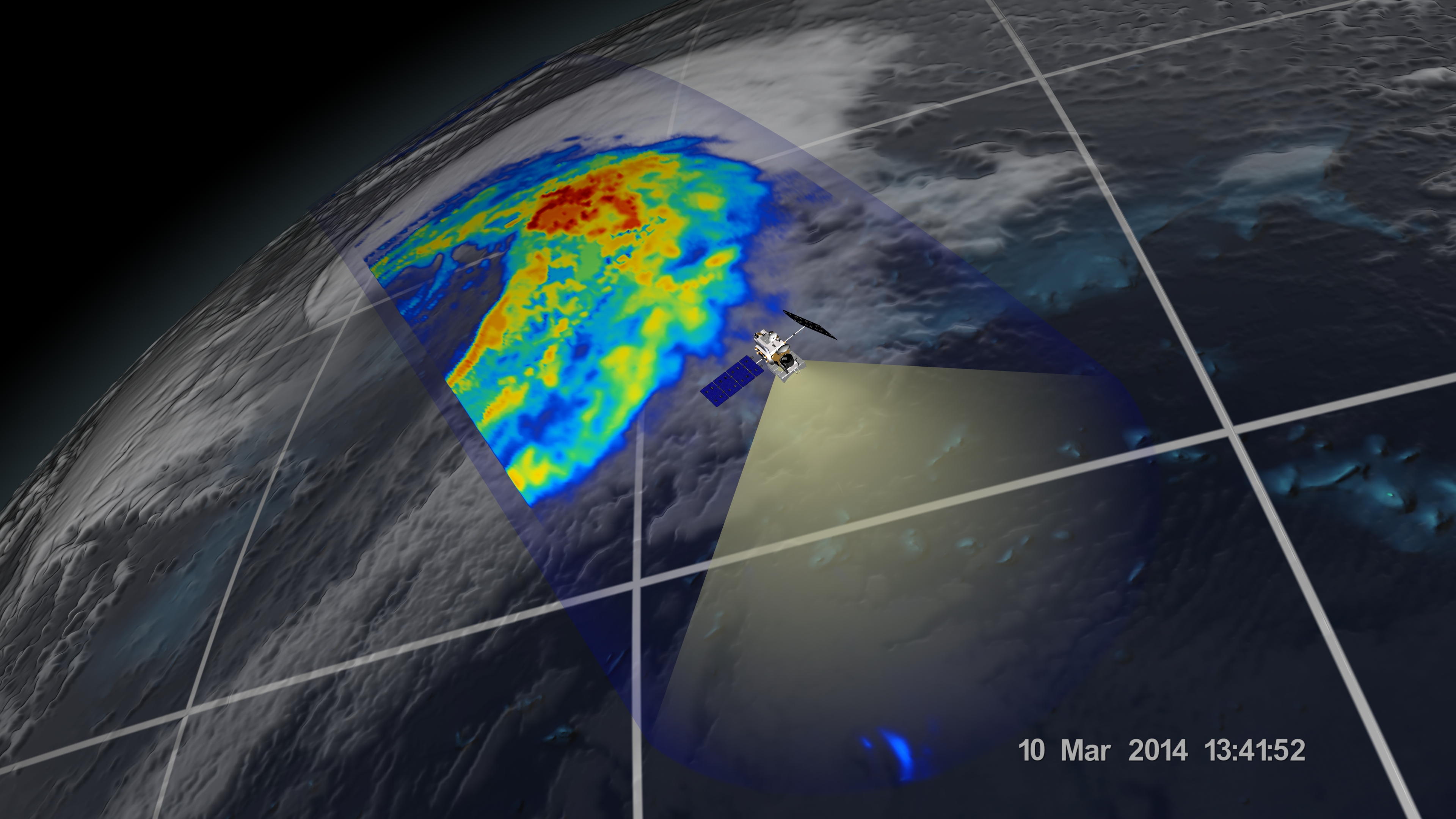
The image shows rain rates across a 550-mile (885 kilometer) wide swath of an extra-tropical cyclone observed off the coast of Japan on March 10, 2014. Red areas indicate heavy rainfall, while yellow and blue indicate less intense rainfall. In the northwest part of the storm in the upper left of the image, the blue areas indicate falling snow.
Learn More

GPM Performs Yaw Turn, Continues Calibration

On March 17, the team executed GPM's first scheduled yaw turn to turn the orientation of the spacecraft 180 degrees. Yaw is the left/right orientation in the horizontal plane of the spacecraft's motion. The spacecraft is now "flying backwards." Yaw maneuvers will be performed approximately every 40 days for spacecraft thermal control, as the angle between the spacecraft's orbit and the sun changes. This keeps the side of the spacecraft that is designed to remain cold from overheating. Yaw maneuvers are performed primarily using the spacecraft's reaction wheels. March 19, the team performed a

Calibrating Thrusters, Verifying Science Data

The Global Precipitation Measurement mission's Core Observatory is performing normally. On March 12, the GPM Core Observatory fired its thrusters for a 30-second check-out of their performance. The burn, called a delta-v, changes the velocity of the spacecraft to adjust the altitude of its orbit. This week's short maneuver did not greatly alter the satellite's orbit but was used instead for further calibration of the thrusters. Functional checkout activities and internal calibration of the Dual-frequency Precipitation Radar continued this week. Both DPR and the GPM Microwave Imager have begun
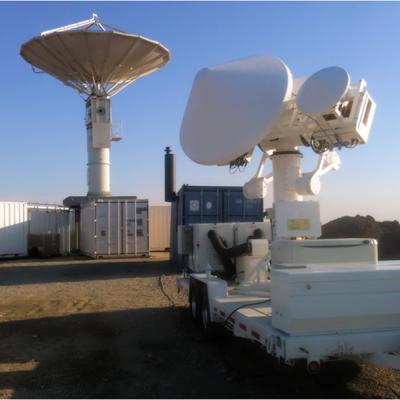
Ground validation radars.
The Global Precipitation Measurement (GPM) Core Observatory, launched on Feb. 27, 2015, from Tanegashima Space Center in Japan, will help advance our understanding of Earth's water and energy cycles, improve the forecasting of extreme events that cause natural disasters, and extend current capabilities of using satellite precipitation information to directly benefit society. The GPM mission will provide unprecedented data on rain and snowfall. The science instruments on the GPM Core Observatory will provide data that will yield the greatest clarity on rain and snow yet gathered from orbiting...

DPR Activated, in Checkout

On Saturday, March 8, just after 10 a.m. EST, the second of the two science instruments aboard the Global Precipitation Measurement (GPM) mission's Core Observatory was activated, and the teams in the mission operations center and launch support room at NASA's Goddard Space Flight Center in Greenbelt, Md., began the instrument's checkout period. DPR functional checkout activities and internal calibrations continued on Sunday and will continue this week and next. DPR data is being sent through the Precipitation Processing System at Goddard to the Japan Aerospace Exploration Agency (JAXA)

GMI Continues Checkout

The Global Precipitation Measurement mission Core Observatory is performing normally. The initial checkout of the GMI instrument and the spacecraft showed both are performing as expected, and the GMI instrument continues to collect science data on rain and snowfall.

GPM Science Check-Out

The Global Precipitation Measurement mission Core Observatory is performing normally. The GPM Microwave Imager (GMI) continues in science mode, and GMI data is being sent to the Precipitation Processing System (PPS) at NASA's Goddard Space Flight Center in Greenbelt, Md. Using the initial data, the instrument team has verified that GMI is working well on-orbit. The GPM Core Observatory will have a 60 day on-orbit check out period to ensure the healthy operation of the spacecraft and instruments. Precipitation data will be released from the PPS no later than 6 months post-launch, after the