

GPM

Content which is affiliated solely with the Global Precipitation Measurement Mission.

IMERG Data Temporarily Suspended

Due to an outage of the input 4-km IR data, the IMERG early and late runs began failing to execute on the April 14. Because of the loss of NOAA hourly IR data, PPS has had to shut off the production of NRT early and late IMERG production. We have received no valid IR data since April 14 17:00 UTC and no IR data at all since April 15 09:00 UTC. The software is able to deal with bad data by skipping it but it is currently not configured to handle the situation of not receiving any data at all. We have received information that there are product problems at NOAA but have not received any
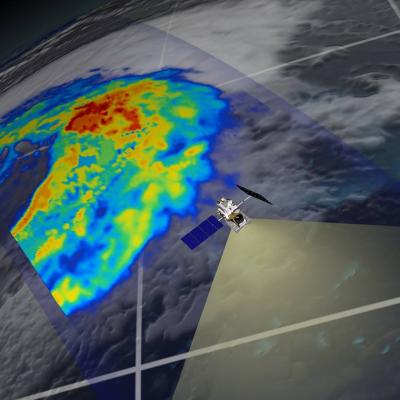
GPM flying over Earth with a data swath visualized.
Deputy Project Manager, Global Precipitation Measurement (GPM) NASA/Goddard Space Flight Center Candace Carlisle has been the GPM Deputy Project Manager at NASA's Goddard Space Flight Center since 2006. Prior to GPM, she spent five years on the Space Technology 5 (ST5) project, first as Mission Systems Engineer, then as Deputy Project Manager. The ST5 spacecraft, as well as the launch vehicle support structure and deployment mechanisms, were built, tested, and operated in-house at Goddard. Candace’s previous experience includes six years on the Earth Science Data and Information System (ESDIS)...
GPM flying over Earth with a data swath visualized.
Project Manager, Global Precipitation Measurement (GPM) NASA/Goddard Space Flight Center Ardeshir (Art) Azarbarzin has been the Project Manager of GPM since 2006. Art obtained his college education from the University of Illinois, where he graduated with a B.S. in Electrical Engineering in 1978 and followed with a M.S. in Aeronautical & Astronautical Engineering in 1980. He began his career at Sundstrand Aviation, as the Design/Project Engineer for Cessna Jet Electro-mechanical Flap Actuation Project. Following that, he was the Systems Engineer for the C-130 Aircraft High Technology Test Bed...

TRMM Spacecraft Re-Entry

June 16, 2015, Update: The Tropical Rainfall Measuring Mission (TRMM) spacecraft re-entered the Earth’s atmosphere on June 15, 2015, at 11:55 p.m. EDT, over the South Indian Ocean, according to the U.S. Strategic Command’s Joint Functional Component Command for Space through the Joint Space Operations Center (JSpOC). The U.S. Space Surveillance Network, operated by the Defense Department's JSpOC, had been closely monitoring TRMM’s descent since the mission was ended in April. Most of the spacecraft was expected to burn up in the atmosphere during its uncontrolled re-entry. Learn more. ----