
GPM

Content which is affiliated solely with the Global Precipitation Measurement Mission.

GPM's Worldwide Tour of Global Precipitation
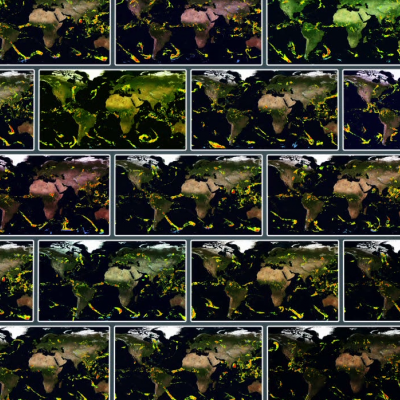
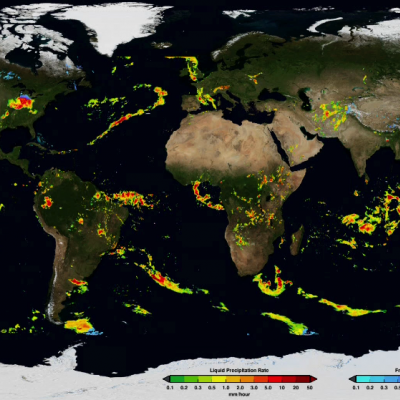
Rain, snow, hail, ice, and every mix in between make up the precipitation that touches everyone on our planet. But precipitation doesn't fall equally in all places around the world, as seen in NASA's new animation that captures every shower, snowstorm and tropical cyclone over a six-day period in August 2014. The time lapse was created from data captured by the Global Precipitation Measurement (GPM) satellite mission, now just over a year old, which scientists are using to better understand freshwater resources, natural disasters, crop health and more. Image Credit: NASA's Goddard Space Flight...
gpm-signs-of-spring-photo-contest
Spring is in the air, and with it lots of precipitation. The Global Precipitation Measurement mission (GPM), launched in February 2014, measures Earth’s precipitation from above using a constellation of satellites. GPM can tell us where and how much it is raining and snowing so we can learn more about Earth’s water cycle, better model our weather and climate, and predict floods, droughts, hurricanes, and more. As GPM watches spring weather from above, we want to see what spring looks like to you! Get out your cameras and show us the signs of spring in your area - from April showers to dew...

IMERG Data Now in Giovanni-4

The NASA Goddard Earth Sciences Data and Information Services Center (GES DISC) has recently added all of the half-hourly and monthly *Final* IMERG data variables to the next generation of Giovanni, Giovanni-4 (G4). Giovanni is a Web-based application developed by the GES DISC that provides a simple and intuitive way for users to visualize, analyze, and access vast amounts of Earth science remote sensing data, without having to download the data. Learn more: http://disc.sci.gsfc.nasa.gov/gesNews/imerg_in_G4
GPM's First Global Rainfall and Snowfall Map
The Global Precipitation Measurement mission has produced its first global map of rainfall and snowfall. Like a lead violin tuning an orchestra, the GPM Core Observatory – launched one year ago on Feb. 27, 2014, as a collaboration between NASA and the Japan Aerospace Exploration Agency – acts as the standard to unify precipitation measurements from a network of 12 satellites. The result is NASA's Integrated Multi-satellite Retrievals for GPM data product, called IMERG, which combines all of these data from 12 satellites into a single, seamless map. The map covers more of the globe than any...
3D Views of February Snow Storms from GPM
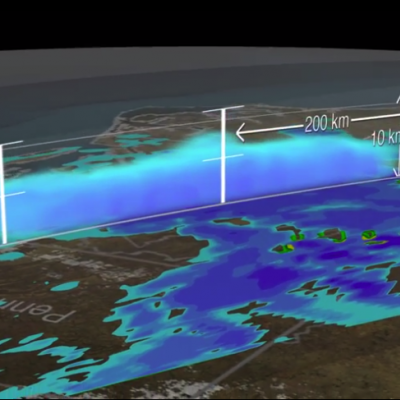
Download this video in HD formats from NASA Goddard's Scientific Visualization Studio The Global Precipitation Measurement (GPM) Core Observatory captured a 3-D image of a winter storm on Feb. 17, 2015, that left 6 to 12 inches of snow over much of Kentucky, southwestern West Virginia and northwestern North Carolina. The shades of blue indicate rates of snowfall, with more intense snowfall shown in darker blue. Intense rainfall is shown in red. The imagery shows great variation in precipitation types over the southeastern United States. Download this video in HD formats from NASA Goddard's...

Initial IMERG Products Released

PPS is re-releasing the first public version IMERG products The Integrated Multi-satellitE Retrievals for GPM (IMERG) merges precipitation estimates from passive microwave sensors, geo-IR, and monthly surface precipitation gauge analysis data (where available) to provide half-hourly and monthly precipitation estimates and related fields on a 0.1° lat./long. grid over the domain 60°N-S. The current period of record is mid-March 2014 to the present (delayed by about 3 months) .Please refer to the IMERG Release notes , the technical IMERG document and the IMERG Algorithm Theoretical Basis

GPM Sees Nor'easter Dump Snow on New England

Submitted by JacobAdmin on
Video Embed

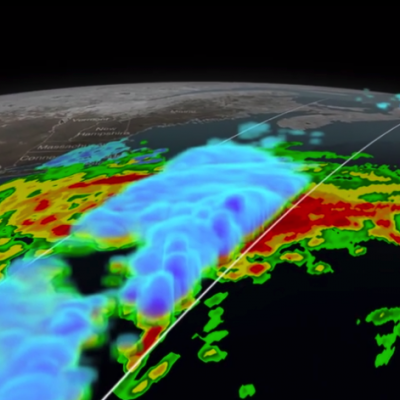
At 5:05 p.m. EST Monday, Jan. 26, 2015, the Global Precipitation Measurement mission's Core Observatory flew over the Nor'easter that dumped snow on New England. This satellite image shows the rate of rainfall, with low amounts in green and high in red, and snowfall, in blue to purple. The center of the storm, shown in 3-D, was offshore with far reaching bands of snowfall. More intense snow rates are shown in darker blue, which can be seen on the northern edge of the storm.

Signs of Spring Spring Weather What is spring to you?  Spring around the world March 20 - launch of contest
At 5:05 p.m. EST Monday, Jan. 26, 2015, the Global Precipitation Measurement mission's Core Observatory flew over the Nor'easter that dumped snow on New England. This satellite image shows the rate of rainfall, with low amounts in green and high in red, and snowfall, in blue to purple. The center of the storm, shown in 3-D, was offshore with far reaching bands of snowfall. More intense snow rates are shown in darker blue, which can be seen on the northern edge of the storm. Visible in the 3-D image of the center of the storm are the snowy tops of the clouds in blue and underneath where it...
GPM Launches Hands-On Field Campaign for Students
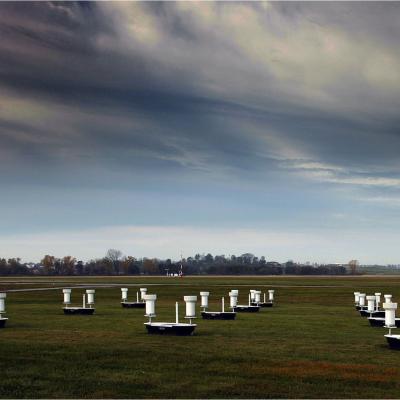
This spring, students worldwide are invited to grab rain gauges and learn how scientists use ground measurements to validate satellite precipitation data. NASA's Global Precipitation Measurement, or GPM, mission is partnering with the Global Learning and Observations to Benefit the Environment (GLOBE) program to conduct a field campaign where students will measure rain and snow in their hometowns from Feb. 1 through mid-April 2015 and then analyze the data. A webinar for teachers to learn more about the campaign and how to participate is scheduled for Jan. 21, 2015. GLOBE is a worldwide hands...