
Data

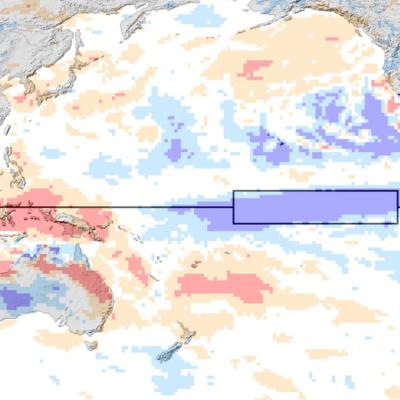
Percent Deviation (large)
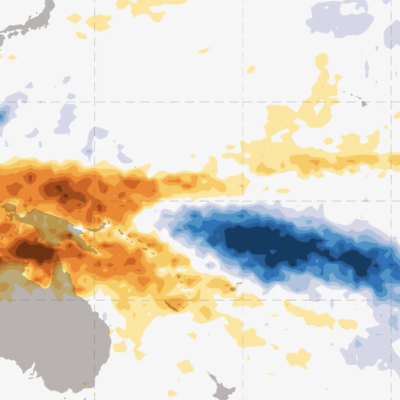
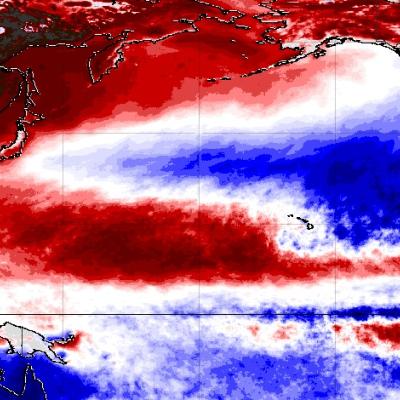
El Niño events occur every two to seven years, and they are driven by feedback between ocean currents and the circulation of the atmosphere over the tropical Pacific Ocean. Variation in ocean temperature and wind patterns drives variation in the rain and snow that falls over the tropical Pacific and elsewhere in the world. Many forecasts have been issued for the El Niño that started in the summer of 2026, and past El Niños have been extensively discussed during the months leading up to this one. One way that NASA contributes to the conversation is to provide, in near real time, estimates of

New WSF-M1 MWI NRT Files Available

Effective August 12, 2026 PPS made available NRT data from the DOD WSF-M1 MWI instrument. Both intercalibrated 1C granules and GPROF precipitation retrieval files are available to users. The WSF NRT granules are about 15 mins long. Some are shorter because of the way they are delivered to NRT. Please note that 1C granules are not the same as the DOD provided SDR product that provide the basis for the intercalibration. 1C products have fewer parameters in them than the original SDR. Only those needed for the precipitation retrieval are included. NOAA is the official distributor of the WSF SDR
Update to the IMERG V08 Transition Schedule, Aug. 2026

This is an update to the IMERG V08 transition schedule posted on April 28, 2026, at https://gpm.nasa.gov/data/news/imerg-v08-transition-schedule. At this moment, the IMERG development team is still waiting for V08 of one of the parent products to IMERG to be finalized. Until this parent product becomes available, the team cannot assess its full impact on IMERG V08 and move towards a complete reprocessing of the record starting 1998. Therefore, at this stage, it seems more likely that IMERG V08 Final Run will be released in the fall of 2026, though this projection assumes that the parent
MJO Phase 1 precipitation anomaly from IMERG
Whether or not it rains a week from now where you live may seem mostly random, but a long enough data record will likely reveal rainfall patterns that repeat over hours, months, or years. Atmospheric scientists describe some of these repeating patterns as cycles and others as oscillations. There are annual and daily precipitation cycles tied to the variation of the sun's path across the sky [1]. An example of precipitation affected by time of day is that summer thunderstorms occur predominantly in afternoon or early evening along the East Coast of the United States. An example of seasonal

IMERG V08 Transition Schedule

For the Final Run, the V07 record ends in September 2025 because the parent products feeding into the IMERG algorithm (CORRA and GPROF) are being upgraded to V08. If processing were to go beyond September, the Final record would have to use V08 inputs instead of V07 inputs. Since the IMERG V07 code is configured with the expectation of V07 inputs, this would introduce potential discontinuities in the Final record. The IMERG V08 Final Run is planned for release in the summer of 2026, though this timeline assumes that V08 of the parent products behaves within expected bounds. When this release
IMERG Precipitation Anomaly for Day of Year 1 to 30
In many places, the amount of that rain falls on a particular day or hour is influenced by multiple natural cycles that exist simultaneously on different time scales. One such cycle repeats every 24 hours, and another repeats every year. The global extent of these cycles can be studied using NASA's IMERG precipitation estimates that have been generated for 1998 to the present. Most of Earth's precipitation falls as rain, and the rest falls as snow, hail, or other forms of precipitation. The length of IMERG's data record makes it possible to average out some of the random error and unrelated

Upcoming GPM Near Real-time Maintenance

On Tuesday, 20 January 2026, NASA's Precipitation Processing System (PPS) will temporarily shutdown the GPM Near Real-time (NRT) system at 18:00 EST (23:00 UTC). This is necessary to complete the move of data from the current high-speed storage system (not currently under maintenance) to the new storage system that is under maintenance. It will take approximately 14 hours to finalize the synchronization of the data from the old storage to the new one. During this 14 hours no new data will be produced or ingested. While user access to the file server (jsimpson.pps.eosdis.nasa.gov and
Thumbnail
RAIN Global Viewer Regional Animations of IMERG in Near-realtime - Global Edition Visualize and animated near-realtime NASA IMERG satellite precipitation estimates. NOTE: This app is intended to be viewed on a large computer monitor. Click Here to view Fullscreen
IMERG Hurricane Harvey (2024) 30-minute summary
NASA's Worldview website now allows you to explore global estimates of rainfall and snowfall from 1998 to the present at 30-minute intervals. Researchers and application developers have been using this dataset since 2014 (Portier 2024; Portier et al. 2023), but now it is also available as images in Worldview.