
Data

IMERG V08 Transition Schedule

For the Final Run, the V07 record ends in September 2025 because the parent products feeding into the IMERG algorithm (CORRA and GPROF) are being upgraded to V08. If processing were to go beyond September, the Final record would have to use V08 inputs instead of V07 inputs. Since the IMERG V07 code is configured with the expectation of V07 inputs, this would introduce potential discontinuities in the Final record. The IMERG V08 Final Run is planned for release in the summer of 2026, though this timeline assumes that V08 of the parent products behaves within expected bounds. When this release
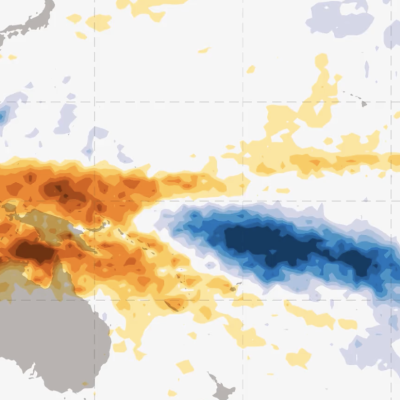
IMERG Precipitation Anomaly for Day of Year 1 to 30
In many places, the amount of that rain falls on a particular day or hour is influenced by multiple natural cycles that exist simultaneously on different time scales. One such cycle repeats every 24 hours, and another repeats every year. The global extent of these cycles can be studied using NASA's IMERG precipitation estimates that have been generated for 1998 to the present. Most of Earth's precipitation falls as rain, and the rest falls as snow, hail, or other forms of precipitation. The length of IMERG's data record makes it possible to average out some of the random error and unrelated

Upcoming GPM Near Real-time Maintenance

On Tuesday, 20 January 2026, NASA's Precipitation Processing System (PPS) will temporarily shutdown the GPM Near Real-time (NRT) system at 18:00 EST (23:00 UTC). This is necessary to complete the move of data from the current high-speed storage system (not currently under maintenance) to the new storage system that is under maintenance. It will take approximately 14 hours to finalize the synchronization of the data from the old storage to the new one. During this 14 hours no new data will be produced or ingested. While user access to the file server (jsimpson.pps.eosdis.nasa.gov and
Thumbnail
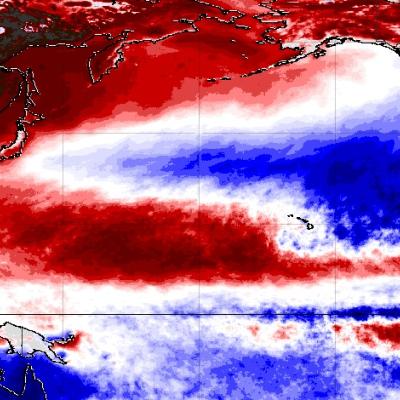
RAIN Global Viewer Regional Animations of IMERG in Near-realtime - Global Edition Visualize and animated near-realtime NASA IMERG satellite precipitation estimates. NOTE: This app is intended to be viewed on a large computer monitor. Click Here to view Fullscreen
IMERG Hurricane Harvey (2024) 30-minute summary
NASA's Worldview website now allows you to explore global estimates of rainfall and snowfall from 1998 to the present at 30-minute intervals. Researchers and application developers have been using this dataset since 2014 (Portier 2024; Portier et al. 2023), but now it is also available as images in Worldview.

End of SSMIS data coming to GPM Near Real-time Products

Department of Defense (DOD) FNMOC has announced its intention to shut down the current flow of operational SSMIS data on 30 June 2025. This is much earlier than the earlier announced date of September 2026, and would suspend the use of F16, F17, and F18 SSMIS data in GPM PPS. We are vigorously pursuing alternatives for continuing access to SSMIS data, but it seems likely that there will be an interruption, and perhaps end, to the SSMIS data streams. The lack of these 3 conically scanning radiometers will impact the accuracy of all IMERG products as they will have data from 3 fewer radiometers
Thumbnail
GPM Precipitation & Applications Global Viewer (v2) Visualize IMERG global satellite precipitation estimates and LHASA landslide nowcasts on an interactive map. NOTE: This app is intended to be viewed on a large computer monitor. Click Here to view Fullscreen This page is a demonstration of the PMM Precipitation and Applications Publisher API. To learn how to use the API for your own applications, please visit: https://pmmpublisher.pps.eosdis.nasa.gov/ https://pmmpublisher.pps.eosdis.nasa.gov/docs For More Information On: the GPM Precipitation products, please see: https://gpm.nasa.gov/data

Equipment Updates on April 16, 2025 Will Impact Access to GPM NRT Servers

On April 16, 2025, hardware updates on the GPM NRT and SDPS processing and network environment will impact processing and access to the systems and data products. The downtime is estimated at 20 minutes, barring any anomalies. The work is planned during a pre-existing gap in satellite data collection: 2025-04-16 gap --- 15:28:39 to 15:43:39 UTC --- 0:15:00 duration Backup times are: 2025-04-16 gap --- 17:06:04 to 17:25:27 UTC --- 0:19:23 duration 2025-04-16 gap --- 17:50:27 to 18:14:55 UTC --- 0:24:28 duration We appreciate your understanding of this interruption of GPM data.