Articles

First Images from NASA-JAXA GPM Satellite
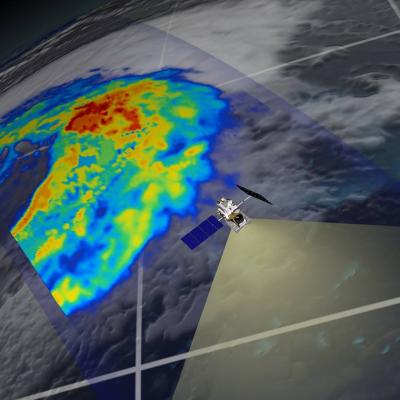
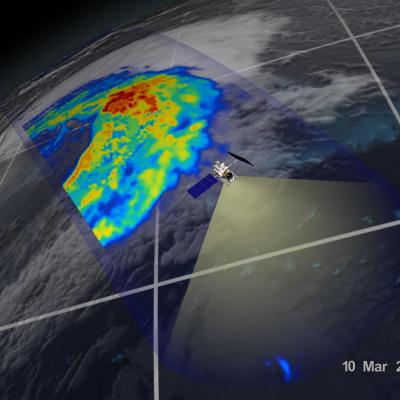
On March 10, the Core Observatory passed over an extra-tropical cyclone about 1055 miles (1700 kilometers) due east of Japan's Honshu Island. Satellite data shows the full range of precipitation in the storm. Image Credit: NASA's Goddard Space Flight Center Download related multimedia in HD formats from NASA Goddard's Scientific Visualization Studio NASA and the Japan Aerospace Exploration Agency (JAXA) have released the first images captured by their newest Earth-observing satellite, the Global Precipitation Measurement (GPM) Core Observatory, which launched into space Feb. 27. The images...
DROP field campaign instruments
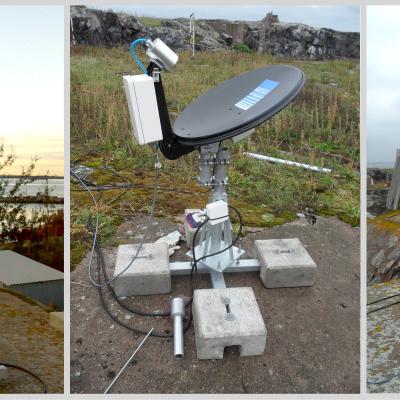
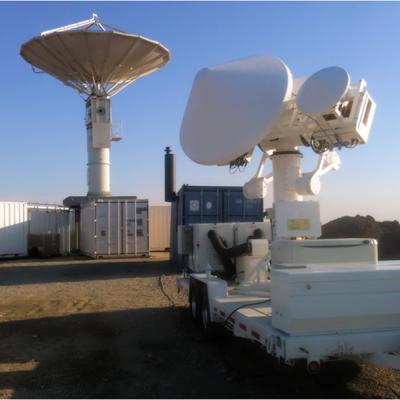
Integrated Precipitation and Hydrology EXperiment The Integrated Precipitation and Hydrology Experiment (IPHEx) is a ground validation field campaign that will take place in the southern Appalachian Mountains in the eastern United States from May 1 to June 15, 2014. IPHEx is co-led by NASA's Global Precipitation Measurement mission, with partners at Duke University and NOAA's Hydrometerological Testbed. The field campaign has two primary goals. The first is to evaluate how well observations from precipitation-monitoring satellites, including the recently launched GPM Core Observatory, match up...
Ground validation radars.
The Global Precipitation Measurement (GPM) Core Observatory, launched on Feb. 27, 2015, from Tanegashima Space Center in Japan, will help advance our understanding of Earth's water and energy cycles, improve the forecasting of extreme events that cause natural disasters, and extend current capabilities of using satellite precipitation information to directly benefit society. The GPM mission will provide unprecedented data on rain and snowfall. The science instruments on the GPM Core Observatory will provide data that will yield the greatest clarity on rain and snow yet gathered from orbiting...
 NASA & JAXA Launch Satellite to Measure Global Rain and Snow
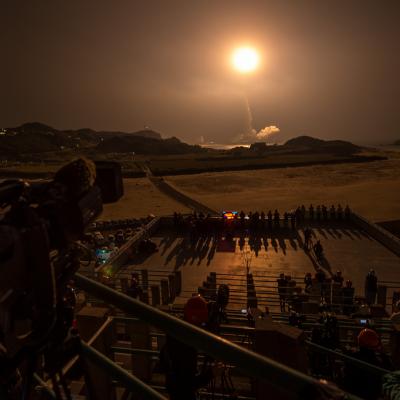
The Global Precipitation Measurement (GPM) Core Observatory, a joint Earth-observing mission between NASA and the Japan Aerospace Exploration Agency (JAXA), thundered into space at 1:37 p.m. EST Thursday, Feb. 27 (3:37 a.m. JST Friday, Feb. 28) from Japan. A Japanese H-IIA rocket with the NASA-Japan Aerospace Exploration Agency (JAXA) Global Precipitation Measurement (GPM) Core Observatory onboard, is seen launching from the Tanegashima Space Center in Tanegashima, Japan. Image Credit: NASA/Bill Ingalls The four-ton spacecraft launched aboard a Japanese H-IIA rocket from Tanegashima Space...
GPM's H-IIA Rocket Rolls Out to the Launch Pad
The H-IIA rocket with the Global Precipitation Measurement Core Observatory aboard rolled out to Launch Pad 1 at 1:04 p.m. on Feb. 27 (Japan time) at Tanegashima Space Center, Japan. The rocket is scheduled to lift off during a launch window that opens at 3:37 a.m. (JST) on Feb. 28. (1:37 p.m. Feb. 27 EST). A Japanese H-IIA rocket carrying the NASA-Japan Aerospace Exploration Agency, Global Precipitation Measurement Core Observatory is seen as it rolls out to its launch pad at the Tanegashima Space Center in Japan. Image Credit: NASA/BIll Ingalls After an overnight rainstorm, clear skies and a...