GPM

Content which is affiliated solely with the Global Precipitation Measurement Mission.

Daruma Doll Delivery

Daruma Doll Delivery
Image Caption
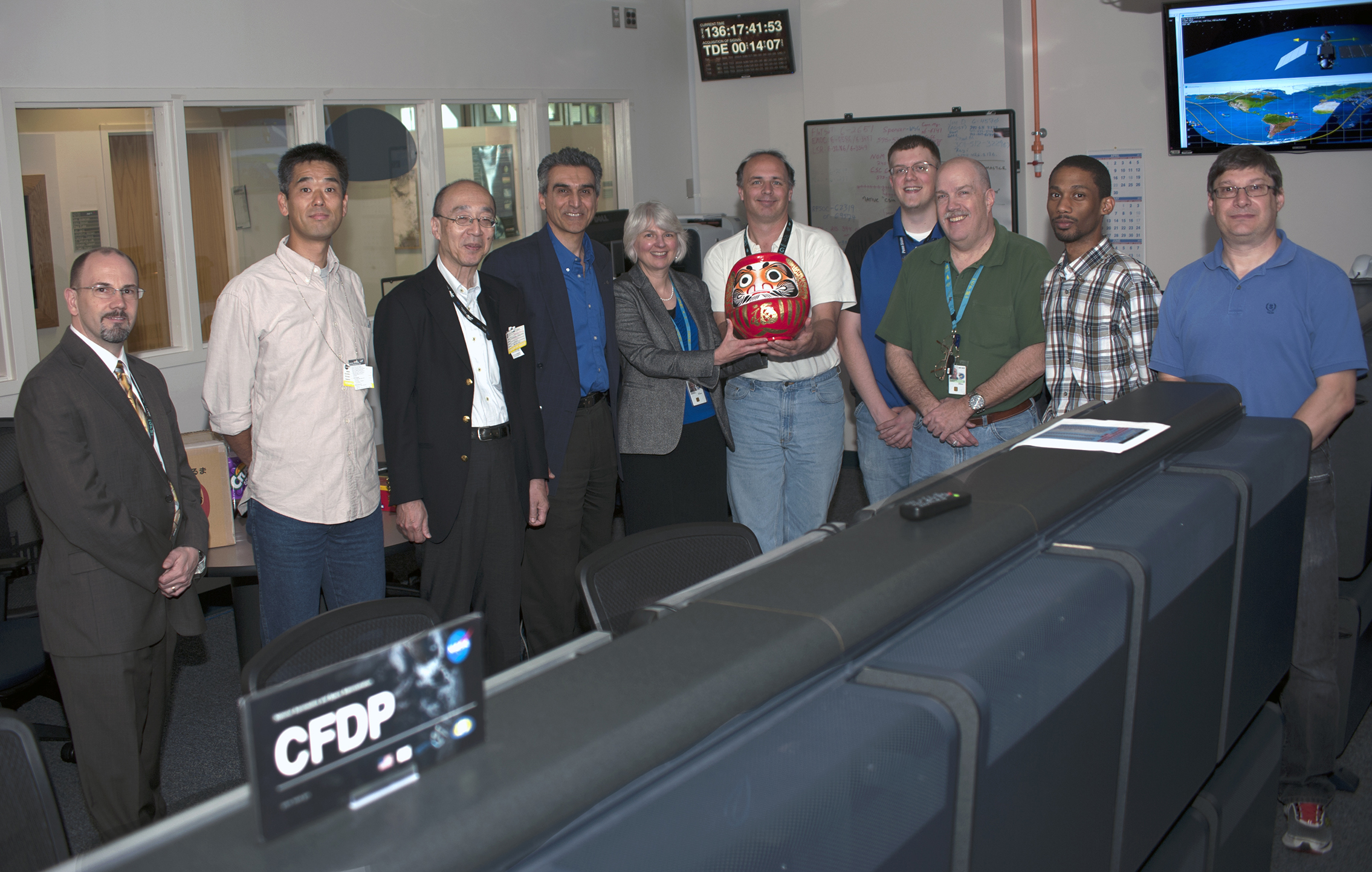
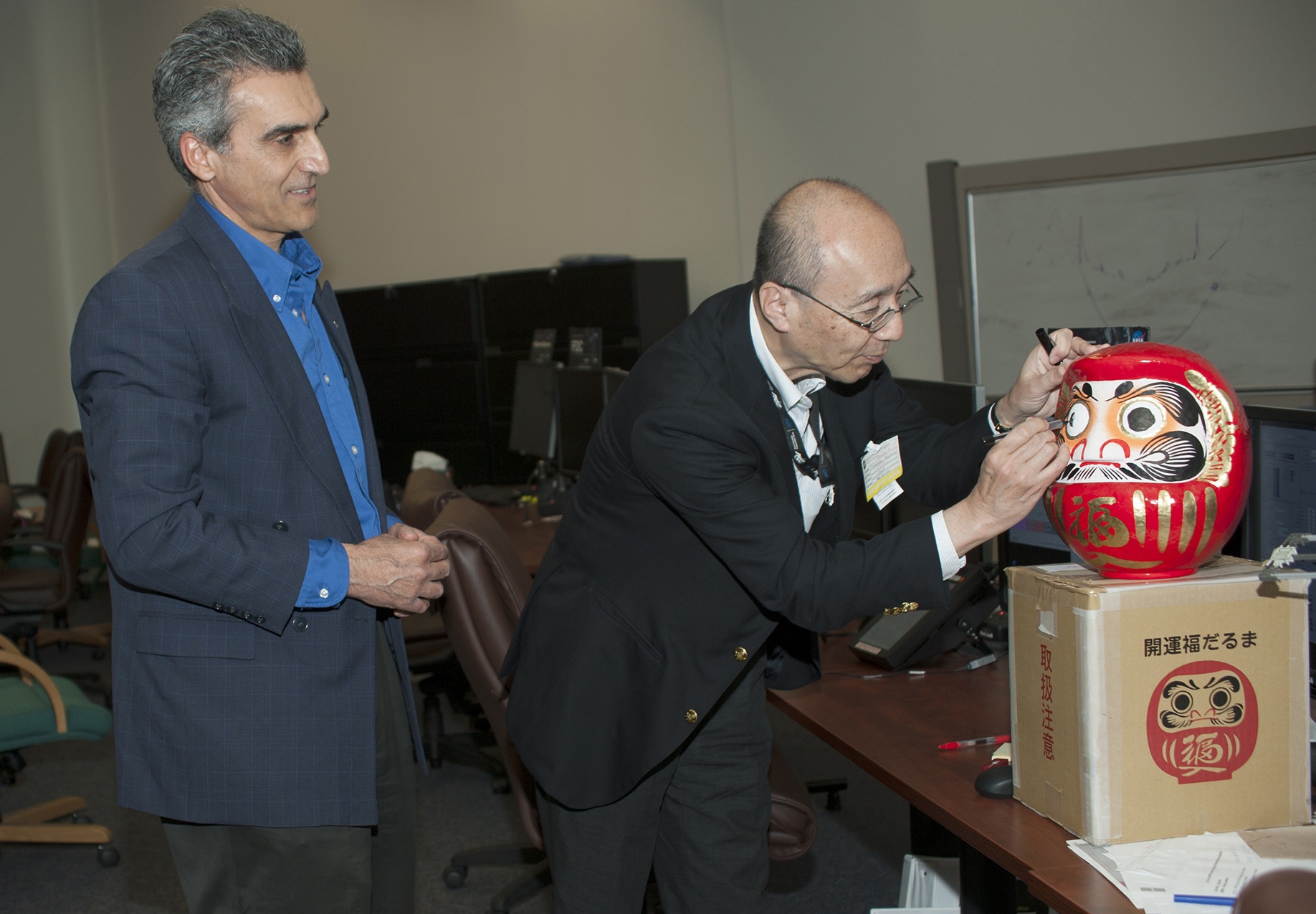
In the Mission Operations Center on May 16, 2014, GPM's NASA and Japan Aerospace Exploration Agency project managers deliver the completed Daruma doll to the members of the Flight Operations team that completed the spacecraft's check-out.

GPM Performs Maneuvers, Continues Calibration

The GPM spacecraft continues to perform normally. The GPM Microwave Imager and Dual-frequency Precipitation radar continue operations and calibration. The spacecraft performed two routine maneuvers. The first was a 180-degree yaw (left/right in the horizontal plane) turn. This is the second yaw turn that changes the orientation of the spacecraft; it is now flying forwards again. Yaw turns are performed approximately every 40 days for thermal control, as the angle between the spacecraft's orbit and the sun changes. This keeps the side of the spacecraft designed to remain cold from overheating

GPM in Final Orbit, DPR Calibration Continues

The Global Precipitation Measurement mission's Core Observatory is performing normally. On April 2, the GPM Core Observatory fired its thrusters for an 80-second delta-V burn that accelerated the spacecraft and circularized its orbit. The Core Observatory is now flying in its final orbit, 253 miles (407 kilometers) above Earth's surface. Calibration of the Dual-frequency Precipitation Radar (DPR) and GPM Microwave Imager (GMI) continued. On March 30 and 31, additional DPR external calibrations took place using the Active Radar Calibration site in Tsukuba, Japan. For the March 31 calibration

Core Observatory Commissioning Continues

The Global Precipitation Measurement mission's Core Observatory commissioning activities continued normally this week. Both the GPM Microwave Imager and the Dual-frequency Precipitation Radar (DPR) are collecting science data and NASA and the Japan Aerospace Exploration Agency released the first images from the instruments on March 25. The DPR's functional checkout activities and internal calibration continued. The first external calibration using the Active Radar Calibration site in Tsukuba, Japan, was performed on March 23. A 120-second "Delta-V" burn was successfully completed Wednesday

GPM's Stormy New View

Submitted by JacobAdmin on
Video Embed

On March 10, the Core Observatory passed over an extra-tropical cyclone On March 10, the Core Observatory passed over an extra-tropical cyclone about 1055 miles (1700 kilometers) due east of Japan's Honshu Island. Satellite data shows the full range of precipitation in the storm. 

Learn More 

First Images from NASA-JAXA GPM Satellite
On March 10, the Core Observatory passed over an extra-tropical cyclone about 1055 miles (1700 kilometers) due east of Japan's Honshu Island. Satellite data shows the full range of precipitation in the storm. Image Credit: NASA's Goddard Space Flight Center Download related multimedia in HD formats from NASA Goddard's Scientific Visualization Studio NASA and the Japan Aerospace Exploration Agency (JAXA) have released the first images captured by their newest Earth-observing satellite, the Global Precipitation Measurement (GPM) Core Observatory, which launched into space Feb. 27. The images...


GPM Performs Yaw Turn, Continues Calibration

On March 17, the team executed GPM's first scheduled yaw turn to turn the orientation of the spacecraft 180 degrees. Yaw is the left/right orientation in the horizontal plane of the spacecraft's motion. The spacecraft is now "flying backwards." Yaw maneuvers will be performed approximately every 40 days for spacecraft thermal control, as the angle between the spacecraft's orbit and the sun changes. This keeps the side of the spacecraft that is designed to remain cold from overheating. Yaw maneuvers are performed primarily using the spacecraft's reaction wheels. March 19, the team performed a

Calibrating Thrusters, Verifying Science Data

The Global Precipitation Measurement mission's Core Observatory is performing normally. On March 12, the GPM Core Observatory fired its thrusters for a 30-second check-out of their performance. The burn, called a delta-v, changes the velocity of the spacecraft to adjust the altitude of its orbit. This week's short maneuver did not greatly alter the satellite's orbit but was used instead for further calibration of the thrusters. Functional checkout activities and internal calibration of the Dual-frequency Precipitation Radar continued this week. Both DPR and the GPM Microwave Imager have begun