


GPM

Content which is affiliated solely with the Global Precipitation Measurement Mission.

GPM Selects Master Teachers
NASA's Global Precipitation Measurement, or GPM, mission recently completed a competitive process to select 25 teachers from around the world for its Master Teacher Program. The chosen educators will develop educational resources based on GPM's data – with a focus on the water cycle and related applications – to share with their students and school communities. "Our goal is to make teachers aware of the wealth of resources offered through NASA education and outreach. We also will receive feedback on how their students received the material," said Dorian Janney, education specialist and manager...
Remembering Dr. Arthur Y. Hou, 1947-2013
An old adage about environmental stewardship goes, “Think Globally, Act Locally.” When it came to rainfall, however, Arthur Hou, project scientist for the Global Precipitation Measurement mission from 2005 until his passing on November 20, 2013, took an approach of Think Globally, Act Globally. "We need virtually continuous observations everywhere to construct a complete picture of precipitation around the globe, and that requires a lot of resources. Fortunately, precipitation does not recognize national boundaries. It is in the best interest of every nation to pool resources together to make...

Level 2 GPM Microwave Imager (GMI) Data Released

The Global Precipitation Measurement (GPM) mission's Precipitation Processing System at NASA’s Goddard Space Flight Center in Greenbelt, Maryland, has released the Level 2 GPM Microwave Imager (GMI) data to the public. The data set includes precipitation rates, which show how much rain and snowfall accumulate over a given time period. This Level 2 data set of falling rain and snow is computed from Level 1 brightness temperature observations from GMI, the basic measurement made by the instrument of naturally occurring energy radiated, in this case, by precipitation particles (raindrops or
GPM Satellite Sees First Atlantic Hurricane
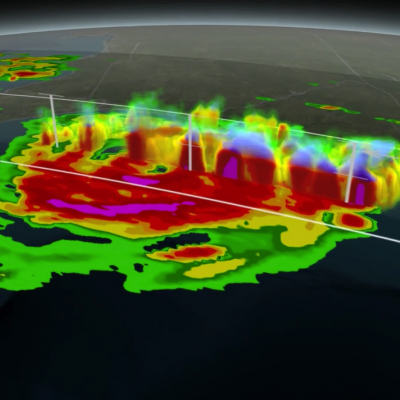
Animation of NASA-JAXA's GPM satellite data of rain rates and internal structure of Hurricane Arthur on July 3 2014. Image Credit: NASA's Scientific Visualization Studio / JAXA Download the Hi-Res Video Here The Global Precipitation Measurement (GPM) Core Observatory flew over Hurricane Arthur five times between July 1 and July 5, 2014. Arthur is the first tropical cyclone of the 2014 Atlantic hurricane season. GPM is a joint mission between NASA and the Japan Aerospace Exploration Agency. The Core Observatory was launched Feb. 27 from Japan and began its prime mission on May 29, just in time...

GPM Dissects Hurricane Arthur

Submitted by JacobAdmin on
Video Embed

The Global Precipitation Measurement mission's Core Observatory flew over Hurricane Arthur five times between July 1 and July 6, 2014. Arthur is the first tropical cyclone of the 2014 Atlantic Hurricane season. It formed as a tropical storm on Tuesday, July 1 and reached maximum intensity as a Category 2 hurricane on July 4, disrupting some coastal U.S. Independence Day celebrations. This visualization is taken from the flyover on July 3, 2014 with Hurricane Arthur just off the South Carolina coast.

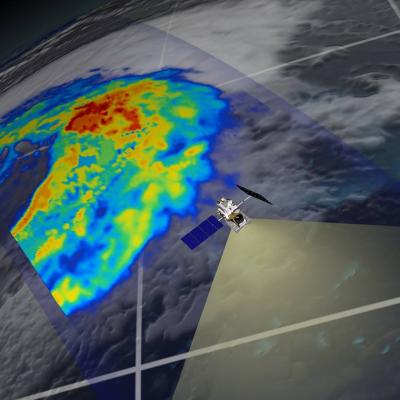
GPM flying over Earth with a data swath visualized.
This page will redirect you to the GPM Ground Validation home page. If you are not automatically redirected, please click here.

GPM Data Release Schedule Announced

The GPM Core Observatory satellite was successfully launched on February 27th, 2014. Data from the GPM Microwave Imager (GMI) and Dual-frequency Precipitation Radar (DPR) have the following release schedule. All data are freely available through the NASA's Precipitation Processing System at http://pps.gsfc.nasa.gov June 16th – GMI Level 1 Brightness Temperature data have been released. This includes GMI instrument swath data. July 14th – GMI Level 2 Precipitation Rate data will be released. This includes precipitation rates estimated using the Goddard Profiling algorithm (GPROF14) and are

First GPM Data Now Public

The first set of data from the Global Precipitation Measurement mission is now available to the public. The data set consists of GPM Microwave Imager instrument observations, called brightness temperatures. Brightness temperatures are a measurement of naturally occurring energy radiated, in this case, by precipitation particles like raindrops or snowflakes. Other data sets, like the rain rate information, will be released later this summer. By themselves, however, the brightness temperatures convey valuable data on the location and structure of storm systems – including tropical cyclones and
GPM Satellite Passes Check-out, Starts Mission
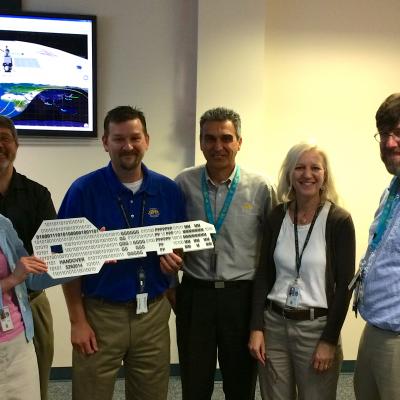
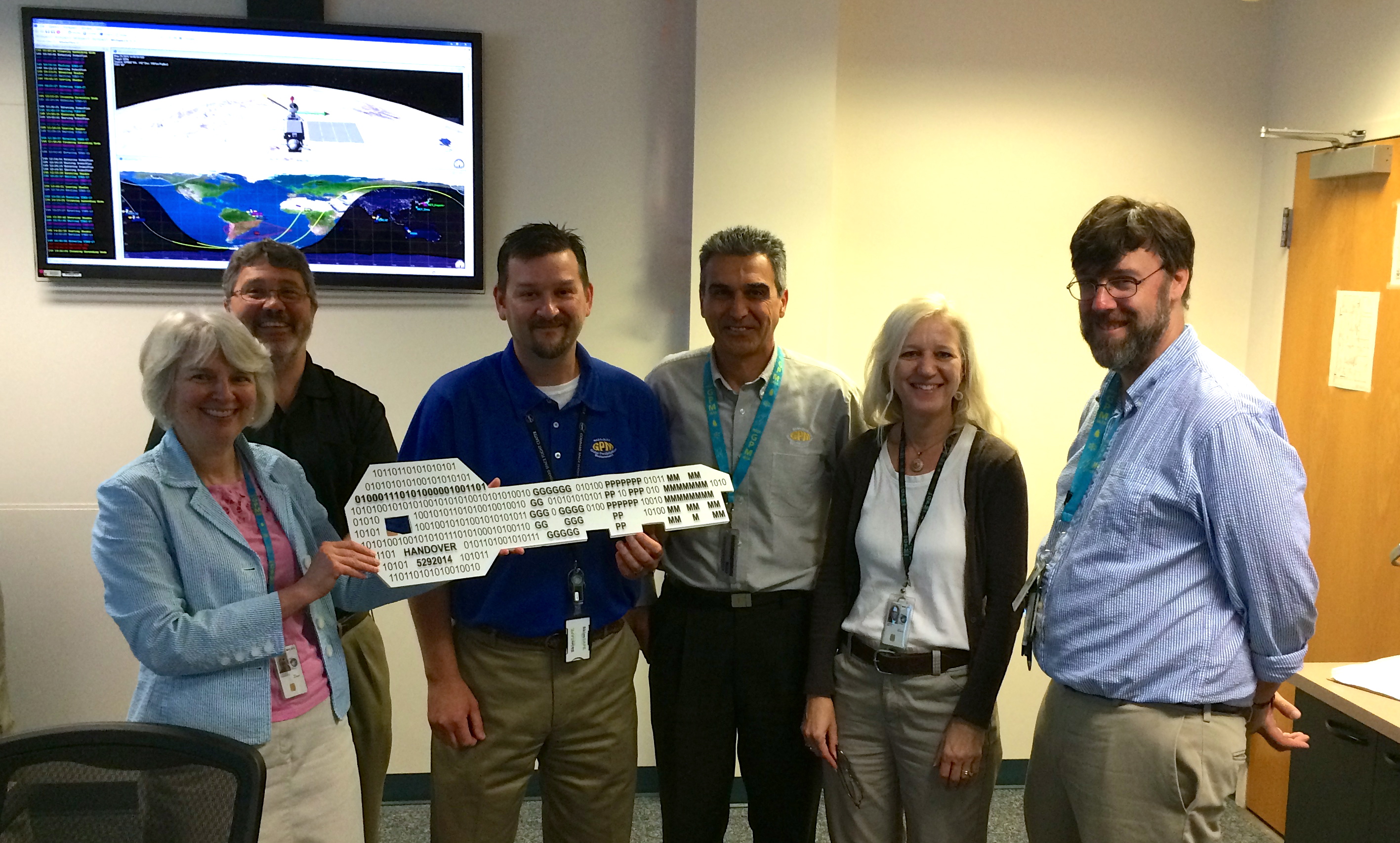
On May 29, GPM Deputy Project Manager Candace Carlisle (left) handed over the "key" to the GPM Core Observatory to GPM Mission Director James Pawloski (center, blue shirt). Also pictured, left to right, Wynn Watson, Art Azarbarzin, Gail Skofronick-Jackson and David Ward. Image Credit: NASA The new Global Precipitation Measurement Core Observatory satellite is now in the hands of the engineers who will fly the spacecraft and ensure the steady flow of data on rain and snow for the life of the mission. The official handover to the NASA / Goddard Earth Science Mission Operations team at NASA’s...

Handover of GPM Key

Handover of GPM Key
Image Caption
On May 29, GPM Deputy Project Manager Candace Carlisle (left) handed over the "key" to the GPM Core Observatory to GPM Mission Director James Pawloski (center, blue shirt).

Also pictured, left to right, Wynn Watson, Art Azarbarzin, Gail Skofronick-Jackson and David Ward.