GPM

Content which is affiliated solely with the Global Precipitation Measurement Mission.

Document Description

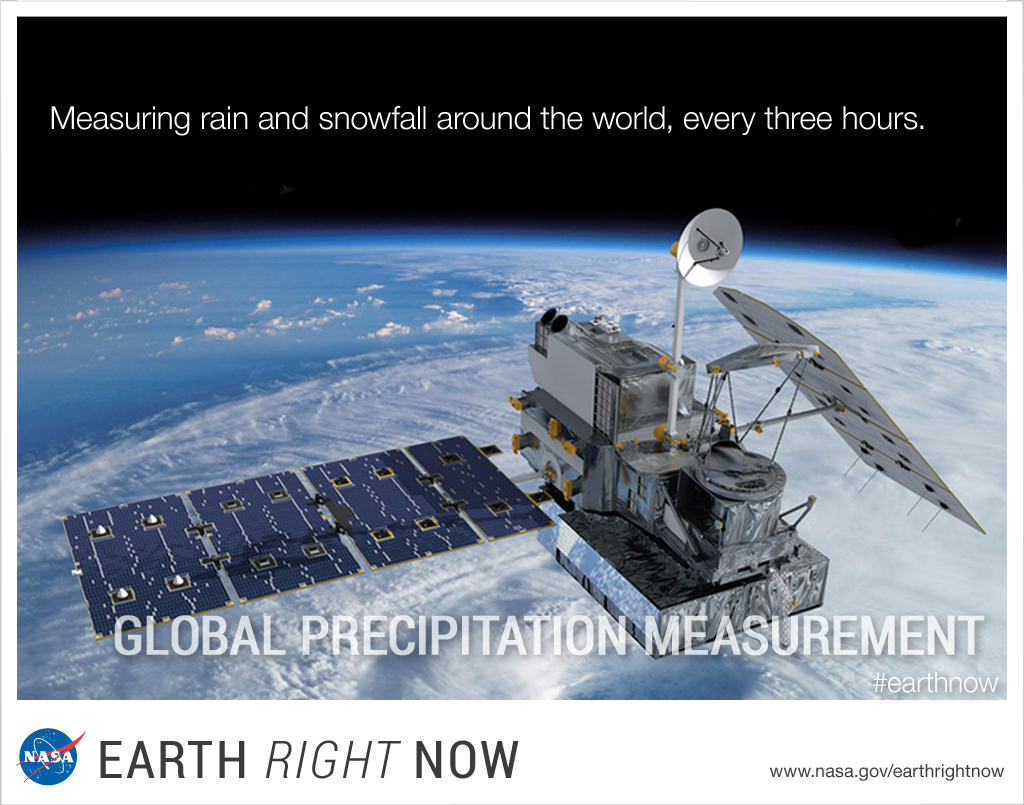
The Global Precipitation Measurement Mission is an international space network of satellites designed to provide the next generation precipitation observations around the world every 2 to 4 hours. It is a science mission with integrated applications goals.

NASA, JAXA Prepare GPM Satellite for Launch
Watch the GPM L-30 Press Briefing on Youtube: Part 1: GPM Mission Briefing Part 2: GPM Science Briefing The world enters a new era of global weather observing and climate science in February with the launch of the Global Precipitation Measurement (GPM) Core Observatory, a new international science satellite built by NASA. GPM, a joint mission between NASA and the Japan Aerospace Exploration Agency (JAXA), is scheduled to launch Feb. 27 from Tanegashima Space Center in Japan. The observatory will link data from a constellation of current and planned satellites to produce next-generation global...
GPM Liftoff
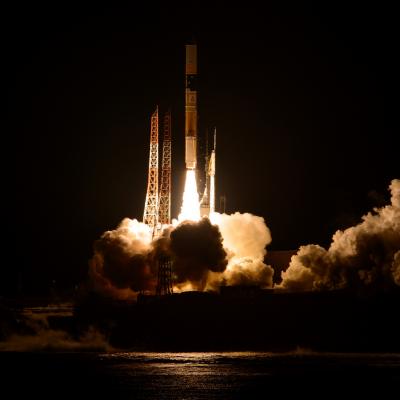
A Japanese H-IIA rocket with the NASA-Japan Aerospace Exploration Agency (JAXA), Global Precipitation Measurement (GPM) Core Observatory onboard, is seen launching from the Tanegashima Space Center, Thursday, Feb. 27, 2014 (Friday Feb. 28 in Japan). The GPM spacecraft will collect information that unifies data from an international network of existing and future satellites to map global rainfall and snowfall every three hours. . Download in High Resolution from the Scientific Visualization Studio Launch Date: February 27th 2014 Launch Time: 1:37 pm ET Launch Vehicle: HII-A Rocket Launch Site...

GPM's Launch Vehicle Arrives at Tanegashima Space Center

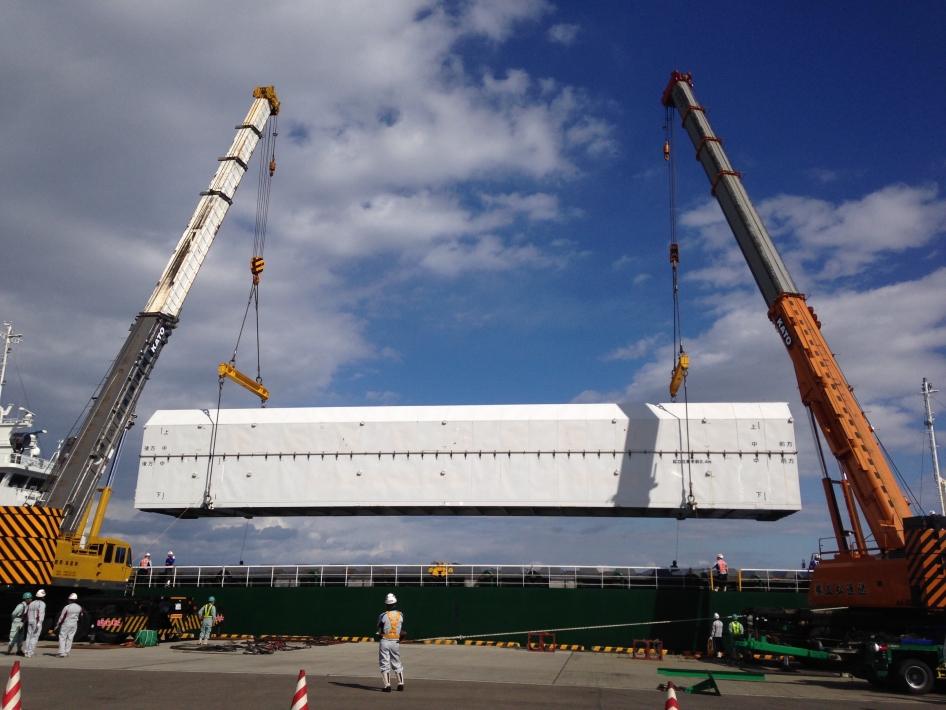
The launch vehicle for the Global Precipitation Measurement, or GPM, mission's Core Observatory arrived at Tanegashima Space Center, Japan, in the pre-dawn hours of Tuesday, Jan. 21, local time. The Japanese H-IIA rocket, No. 23, has two stages that arrived by cargo freighter the previous evening. They were then trucked across the island in the middle of the night when no cars were on the road. Both stages of the Japanese H-IIA rocket arrived at Tanegashima Island, Japan on Jan. 20, 2014. Above, the first stage in its shipping container is lifted off of the cargo freighter. It and the upper
NASA Premieres Unique Film on Water on Spherical Screen
NASA has created a unique spherical film showing water's journey and extensive impact as it cycles through Earth. "Water Falls," created in partnership with the Global Precipitation Measurement mission, will premiere this month on spherical movie screens at special events hosted by The Wild Center in Tupper Lake, N.Y., and The Space Foundation in Colorado Springs, Colo. Shortly afterwards it will be released to more than 100 Science On a Sphere venues worldwide starting Jan. 31, 2014. Download Video in HD Formats NASA's Goddard Space Flight Center in Greenbelt, Md., produced the nine-minute...

GPM Completes Propulsion System Checks, End-to-End Test, Mission Rehearsal

The Global Precipitation Measurement (GPM) Core Observatory had a busy week at Tanegashima Space Center, Japan. The GPM propulsion team did a thorough check of the propulsion system to prepare for fueling the spacecraft later this month. In addition, the GPM completed a full End-to-End test. End-to-End testing simulates mission conditions with the ground systems and communication systems between the spacecraft, data return functions, the Mission Operations Center and Precipitation Processing System at NASA’s Goddard Space Flight Center in Greenbelt, Md., and the Japan Aerospace Exploration
New Video Shows GPM's Journey to Japan
Pack it up, put it on a plane and fly it to Japan. It sounds simple enough, but a new video from NASA shows when your package is a satellite, it's anything but. NASA's new video, "GPM's Journey to Japan," highlights the unique shipment of the Global Precipitation Measurement mission's Core Observatory by air, land and sea. Built at NASA's Goddard Space Flight Center in Greenbelt, Md., the GPM spacecraft travelled roughly 7,300 miles (11,750 kilometers) to its launch site at Tanegashima Space Center on Tanegashima Island, Japan, where it is scheduled for liftoff on Feb. 27, 2014, at 1:07 p.m...


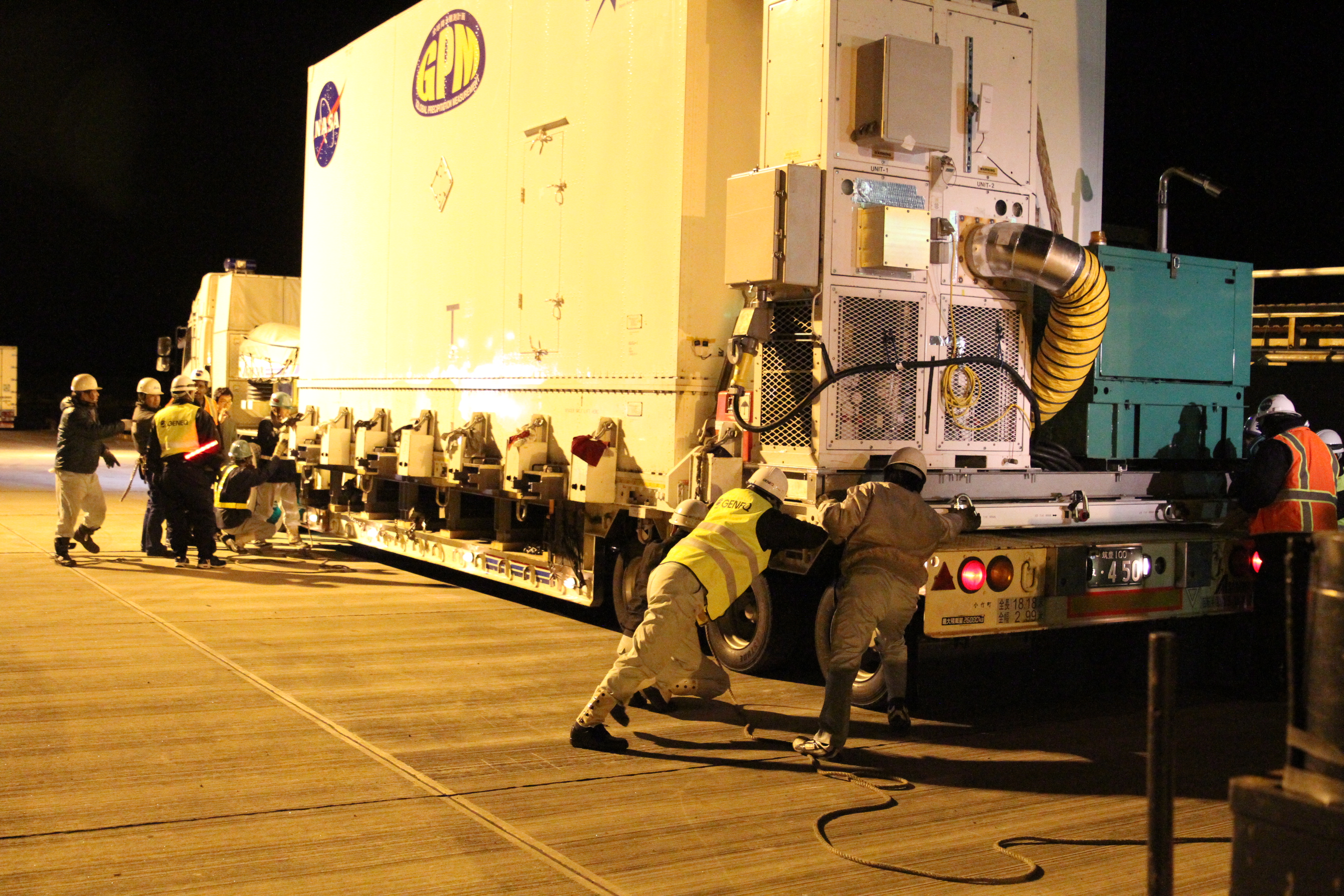
GPM Loaded onto Truck in Japan

GPM Loaded onto Truck in Japan
Image Caption
GPM on its last truck during shipment to the launch site.

On the back of the shipping container sits the Environmental Control Unit (left), as well as its generator (green on the right). The ECU has heaters and air conditioners to regulate temperature and humidity as well as filters on the air vents to keep out any contaminants.