
GPM Successfully Completes Performance and Functional Testing

An engineer stands in front of the GPM Core Observatory in the EMI testing chamber. GPM has successfully completed post-environmental Comprehensive Performance and Functional testing. These tests are performed to verify that the GPM Core satellite still meets all of its requirements after completing a suite of environmental tests (thermal/vacuum, electromagnetic interference/electromagnetic compatibility, vibration/acoustic/shock). The satellite is now being prepared for shipment to the HII-A launch site in Tanegashima, Japan.

TRMM Sees Two Pacific Tropical Cyclones

Tropical Storm Lekima Tropical Storm Francisco The TRMM satellite flew above the centers of two tropical cyclones in the western Pacific Ocean early this morning. The first orbit saw super typhoon LEKIMA at 0745 UTC and with the next orbit tropical storm FRANCISCO came into view at 0919 UTC. Lekima was located southeast of tropical storm Francisco over the open waters of the Pacific. Precipitation data from TRMM's Microwave Imager (TMI) and Precipitation Radar (PR) instuments are shown overlaid on infrared images from TRMM's Visible and InfraRed Scanner (VIRS). These rainfall analyses show the

Hurricane Raymond's Copious Rainfall Analyzed

Powerful hurricane Raymond, located off Mexico's south-central Pacific coast, has weakened to a tropical storm. It has now started to move slowly away from the location where it has been parked since Monday October 21, 2013. Raymond dropped abundant rainfall in much of the same area already hit by deadly flooding and landslides with Hurricane Manuel last month. The rainfall analysis above was made at Goddard Space Flight Center using TRMM-based, near-real time Multi-satellite Precipitation data (TMPA) collected during the period from October 15 to 23, 2013. Rainfall totals greater than 125mm (

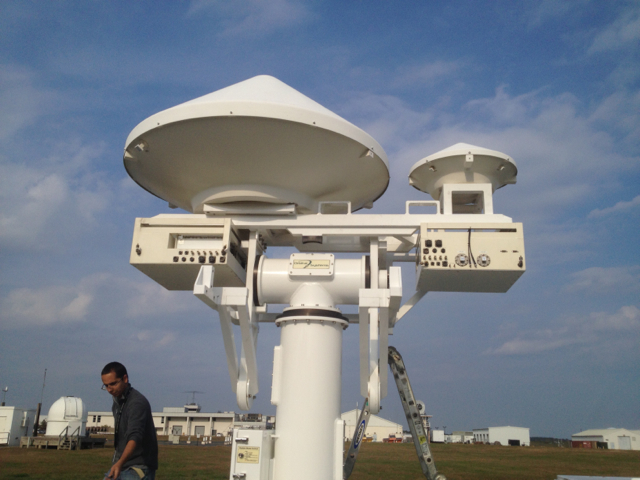
International GPM Ground Validation Workshop

The Sixth International Ground Validation Workshop will be held November 5 -7 in Rome, Italy, at the headquarters of the National Research Council of Italy ( CNR), Institute of Atmospheric Sciences and Climate ( ISAC). The workshop is organized in coordination with NASA’s Precipitation Measurement Missions Science Program. The meeting will focus on activities related to the upcoming launch of the Global Precipitation Measurement mission's Core Observatory, including: Developing consensus plans for post-launch assessments of satellite algorithms/products using GV measurements Reviewing results

Weaker Typhoon Francisco Seen By TRMM

Typhoon Francisco was headed toward the islands of southern Japan when the TRMM satellite had a good view on October 22, 2013 at 0933 UTC. Francisco was weakening and had estimated winds of less than 75kts (~86 mph) with this TRMM pass. An analysis derived from TRMM's Microwave Imager (TMI) and Precipitation Radar (PR) instruments is shown overlaid on an enhanced infrared image from TRMM's Visible and InfraRed Scanner (VIRS). This analysis showed that the most intense rain was falling at a rate of over 75mm/hr (~3 inches) in a location well to the southwest of Francisco's center of circulation