
Six Week GCPEx Campaign Concludes

February 29 marked the last day of the GPM Cold Season Experiment. After six weeks of no snow, light snow, rain, and some nice heavy snowstorms, the GCPEx team is heading home. The ADMIRARI instrument at the CARE site with blowing light snow (11 Feb 2012) Credit: NASA / Chris Kidd The campaign ended with a big storm last Friday, February 24th, that put all three planes in the air over an eight hour period. They captured a wide array of different types of snow and rain from Eastern New York as the DC-8 flew in from Maine to north of the CARE site in Huronia and Georgian Bay, off of Lake Huron

GPM Microwave Imager Instrument Arrives at Goddard

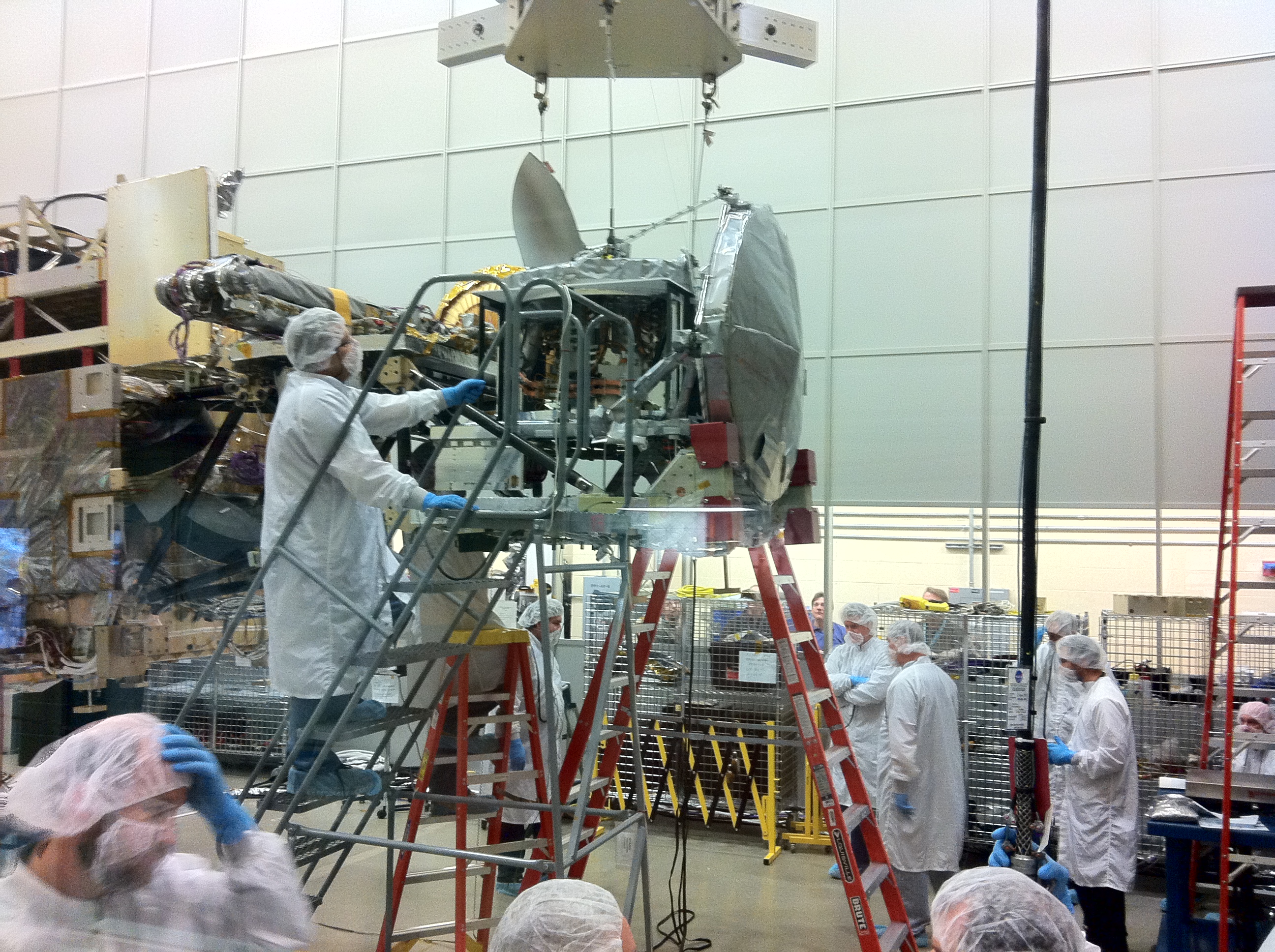
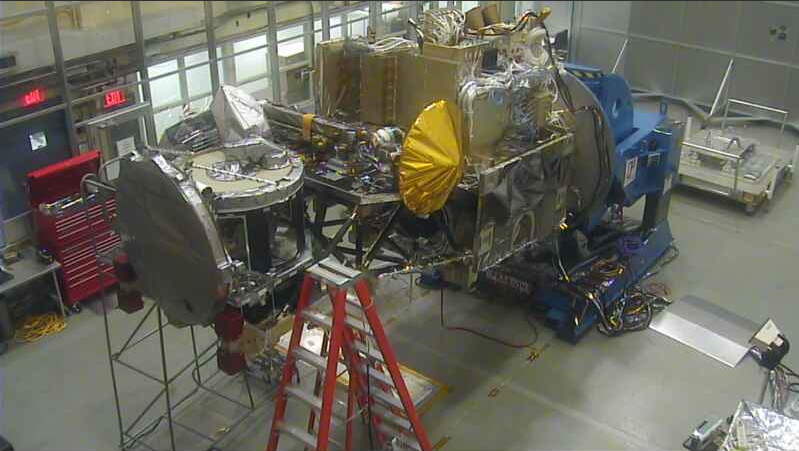
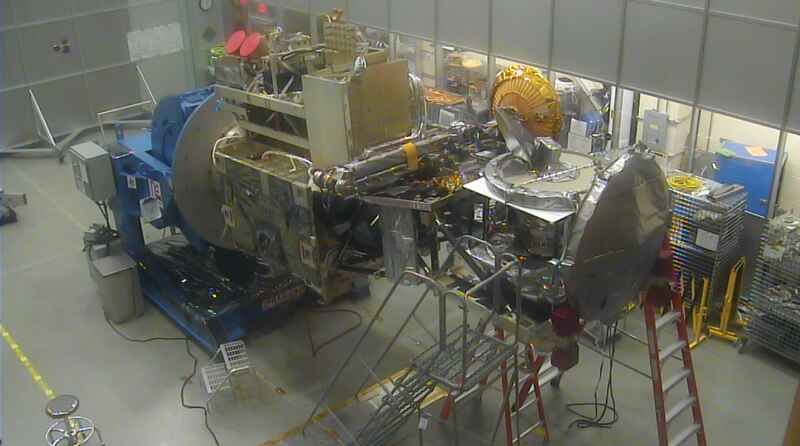
By Rob Gutro, NASA Goddard Space Flight Center Original www.nasa.gov Press Release (published 3/1/12) The Global Precipitation Measurement Microwave Imager (GMI) instrument has arrived at NASA's Goddard Space Flight Center in Greenbelt, Md. for integration into NASA's upcoming Earth science spacecraft. The instrument was built at the Ball Aerospace and Technologies Corp., Boulder, Colo. The GPM Microwave Imager instrument being placed in the acoustic chamber at NASA's Goddard Space Flight Center on March 1, 2012. Credit: NASA / Ball Aerospace Engineers at NASA Goddard will integrate both the

TRMM Satellite Shows Possible Storm Development

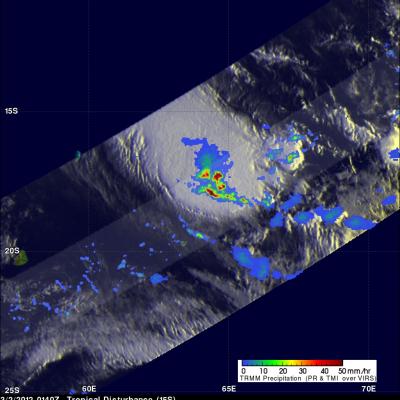
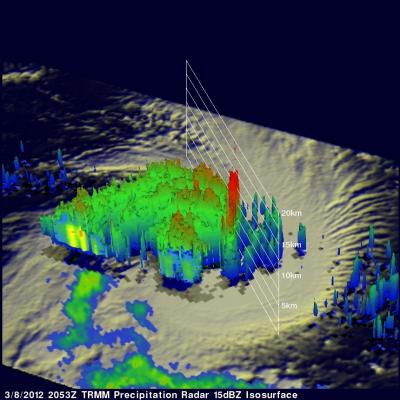
The TRMM satellite had another revealing pass over the Mozambique Channel and Madagascar on 27 February 2012 at 2011 UTC. This area is being monitored for significant tropical cyclone development. TRMM's Microwave Imager (TMI) and Precipitation Radar (PR) data were used in the rainfall analysis on the upper left. This analysis shows that very intense storms were being produced by a cyclonic circulation off northwestern Mozambique. These storms were dropping rainfall at a rate of over 50mm/hr (~2 inches) in the Mozambique Channel between Mozambique and Madagascar. The 3-D TRMM PR image on the