How does GPM contribute to Homeland Security?
GPM can help numerical models that predict some aspects of chemical / biological / nuclear (C/B/N) agent dispersal and assess removal of these agents from the air by rainfall.
GPM provides precipitation information that the health community can use to identify weather and climate patterns associated with disease outbreaks and provide advanced warning of the outbreaks.
Both water resource managers and the agricultural community need to know the amount, distribution, timing and onset of seasonal rainfall to prepare for freshwater shortages and forecast crop yields. By providing four-dimensional measurements of space-time variability of global precipitation, GPM allows for a better understanding of precipitation systems, water cycle variability, and freshwater availability to predict changes in freshwater supply and assess crop productivity.
GPM can better characterize variables such as surface water fluxes, cloud/precipitation microphysics, and latent heat release in the Earth’s atmosphere. These variables then help validate climate models that are necessary for making climate predictions.
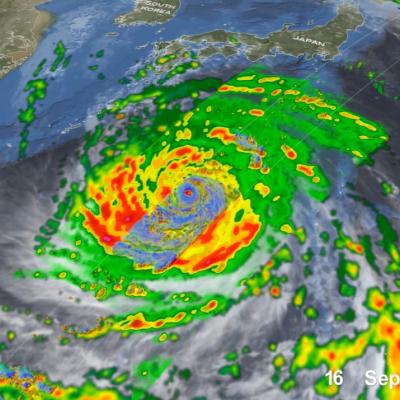
The increased sensitivity of the Dual-frequency Precipitation Radar (DPR) and the high-frequency channels on the GPM Microwave Imager (GMI) enables GPM to improve forecasting by estimating light rain and falling snow outside the tropics, even in the winter seasons, over areas which other satellites and ground sensors are unable to measure. These advanced measurements extend current capabilities in monitoring and predicting hurricanes and other extreme weather events, as well as contributing to improve forecasting for floods, landslides, and droughts.