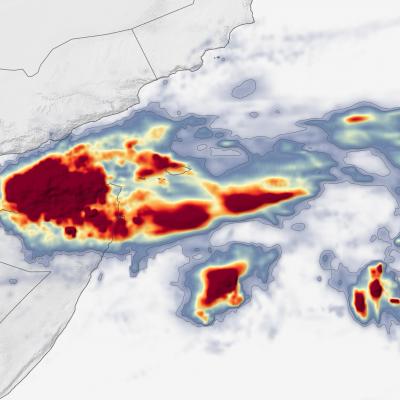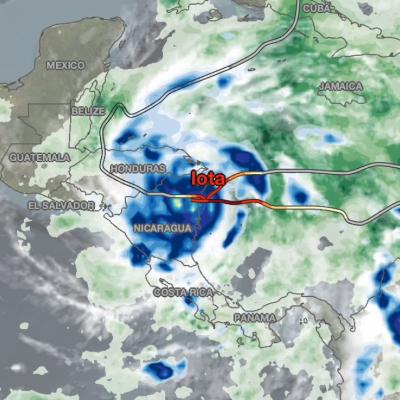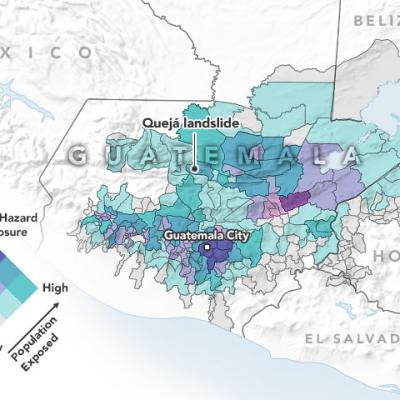

What effect do mountainous regions have on measuring precipitation? (orographic precipitation)

Wind flow up a mountain tends to enhance precipitation – when the air moves higher into the atmosphere it is cooled, which drops the saturation dew point, and therefore tends to make more moisture available.  Wind blowing down the mountain does the opposite.  If the atmosphere is sufficiently unstable, the lift provokes deep convection.  But in less convective situations, the extra moisture is squeezed out in the lowest layers of the atmosphere, mostly as the entirely liquid “warm rain process”.

In what sense is the entire record for each Run (Early, Late, Final) processed “consistently”?

The entire record for each Run (Early, Late, or Final) is computed with the same version of processing, with the same input steams specified for that Run.  The data that are processed afresh are called “Initial Processing” (IP) and those that processed after the fact when the new version starts are called “retrospective processing” (RP).  The RP have a couple of simplifications that the team doesn’t believe are important, but should be mentioned for completeness:

Drop Size Distribution Measurements in Outer Rainbands of Hurricane Dorian at the NASA Wallops Precipitation-Research Facility

Submitted by LisaN on
Publication Year
Authors
Thurai, M., V. N. Bringi, D. B. Wolff, D. A Marks, and C. S. Pabla
Journal
atmosphere
Volume
11(6)
Page Numbers
578
DOI
10.3390/atmos11060578
Mission Affiliation
Major Category

The GPM Validation Network and Evaluation of Satellite-Based Retrievals of the Rain Drop Size Distribution

Submitted by LisaN on
Publication Year
Authors
Gatlin, P., W. A Petersen, J. L. Pippitt, T. A Berendes, D. B. Wolff, and A. Tokay
Journal
atmosphere
Volume
11(9)
Page Numbers
1010
DOI
10.3390/atmos11091010
Mission Affiliation
Major Category