
GPM Transitioning its Web-based Global Displays

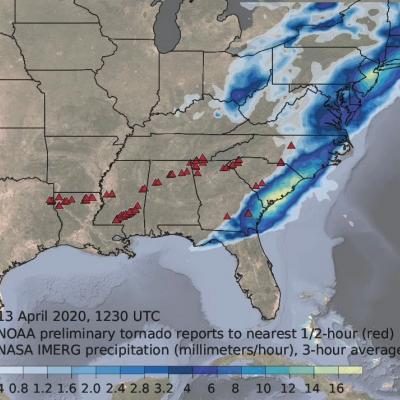
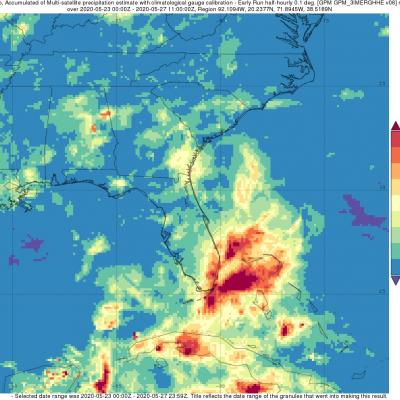
What: Google Earth access for near-realtime IMERG and 3B42 KML files will be replaced by an updated service for viewing precipitation data in near-real time on a 3D virtual globe using Cesium ( https://cesiumjs.org/). When: The current plan is to make the cut-over to the new Cesium-based service on or about October 16, 2016. Why: The evolution of network policies and applications prevents continued GPM use of Google Earth. Note: If you wish to continue using KML files with a non-Google Earth client, please contact the Precipitation Measurement Missions at: https://pmm.nasa.gov/contact

PPS Down for Maintenance Tuesday September 20, 2016

The PPS (Precipitation Processing System) will be down today, September 20,2016 from 8:00am -2:00pm EDT (12:00 - 18:00 UTC). for scheduled maintenance. During this time all data transfers between PPS source and its consumer systems (GDAAC/DISC) as well as Science User services (FTP and STORM access) will be unavailable. You may contact PPS Operations at 301-614-5247 , 301-614-5184 or fax us at 301-614-5269 if there are any urgent matters requiring our immediate attention during this period. You will be informed when PPS systems become available. We apologize for any inconvenience this may

GPM Sees Typhoon Malakas Starting To Batter Japan

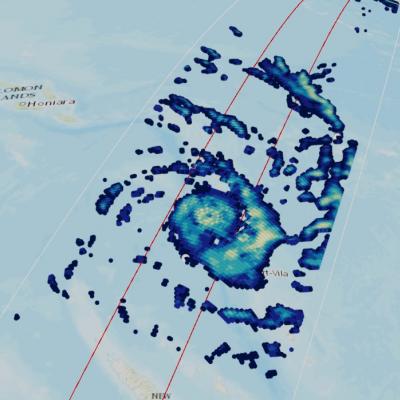
September 19, 2016 0046 UTC September 19, 2016 1031 UTC After causing high winds and heavy rainfall over northern Taiwan, typhoon Malakas is now starting to batter the islands of southern Japan. The GPM core observatory satellite passed above typhoon Malakas twice on September 19, 2016. The first time was at 0046 UTC when the typhoon was starting to cause light to moderate rainfall over the island of Kyushu. At 1031 UTC GPM showed that moderate to heavy rainfall was moving over Kyushu and the typhoon's appearance had changed significantly. The change in appearance was credited to increased

3D Precipitation Structure Within Hurricane Orlene Examined By GPM Satellite

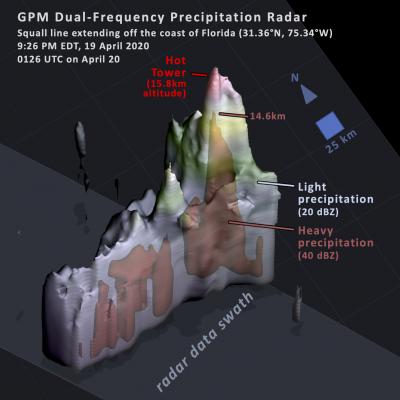
Orlene, the 9th hurricane of the 2016 eastern Pacific season has weakened to a tropical storm. The GPM core observatory satellite flew over on September 15, 2016 at 1801 UTC when Orlene was still a hurricane with winds reaching about 70 kts (81 mph). Hurricane Orlene's rainfall was examined in 3-D using data collected by the GPM satellite's Dual-Frequency Precipitation Radar (DPR). This digital "CAT scan" like view inside hurricane Orlene shows the locations of the most intense rainfall. An area of heavy downpours was uncovered near the center of Orlene's center of circulation. Radar

PPS Down for Extended Maintenance, Sunday September 18, 2016

The PPS (Precipitation Processing System) will be down Sunday September 18, 2016 -estimated time from 10:00am to 6:00pm EDT (14:00 - 22:00 UTC) for Special Unscheduled Maintenance. Please note: although it is unlikely, due to unforeseen events PPS systems might be down overnight and only be available starting Monday morning, September 19, 2016. During this time, all data transfers between PPS source and its consumer systems (GDAAC/DISC) as well as Science User services (FTP and STORM access) will be unavailable. You may e-mail “sysgods@mail.pps.eosdis.nasa.gov” if there are any urgent matters