Hurricane Nicole Lashes Bermuda

While powerful Hurricane Matthew drew a lot of attention as it made its way through the northern Caribbean and the Bahamas before ravaging the US East Coast with strong winds and massive flooding, another storm was lurking nearby in the western Atlantic--Nicole. Nicole, which like Matthew, also originated from a tropical wave that made its way across the central Atlantic from the coast of Africa. Nicole first became a tropical storm on the morning of the 4th of October about 525 miles northeast of San Juan Puerto Rico just after Matthew, a powerful Category 4 storm at the time, had devastated

Deadly Hurricane Matthew's Total Rainfall

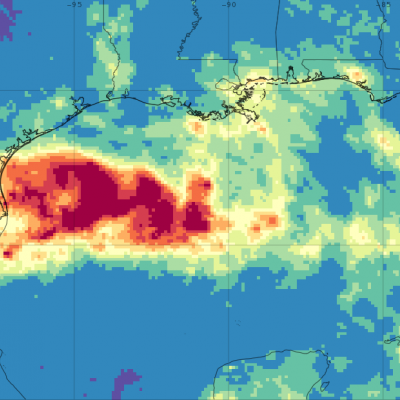
Hurricane Matthew devastated western Haiti and killed over 1,000 people. Matthew also took the lives of at least 37 deaths in the United States with 18 deaths occurring in the state of North Carolina. Flooding is still widespread in North Carolina. Some rivers in North Carolina such as the Tar and the Neuse are still rising. This rainfall analysis was accomplished using data from NASA's Integrated Multi-satelliE Retrievals for GPM (IMERG). IMERG is a unified U.S. algorithm that provides a multi-satellite precipitation product. IMERG is run twice in near-real time with the “Early” multi

Matthew Brings Heavy Rains, Destruction to Parts of the Northern Caribbean

Matthew began as a fairly impressive tropical wave that emerged off of the coast of Africa on the 23rd of September but had to make its way all the way across the Central Atlantic before finally organizing into a tropical storm on the morning of the 28th while passing through the Windward Islands. Matthew then slowly but steadily intensified into a minimal hurricane by the early afternoon of the following day as it continued to track westward through the central eastern Caribbean. The next day, September 30th, Matthew underwent a period of rapid intensification; its winds increased in

GPM Sees Hurricane Matthew Producing Dangerous Rainfall

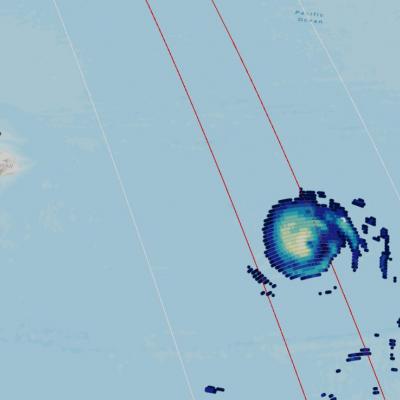
The GPM core observatory satellite passed above hurricane Matthew on October 2, 2016 at 5:46 AM EDT (0946 UTC). GPM’s Microwave Imager (GMI) and Dual-Frequency Precipitation Radar (DPR) instruments collected data that were used in the rainfall map shown here. GPM found that very heavy rainfall was located around Matthew. Rain was revealed by GPM falling at a rate of over 6.4 inches (163 mm) in some areas near hurricane Matthew. Of particular interest is an area of very heavy rain located well to the east of Hurricane Matthew’s center. This blob of strong convective storms has been persistent