What are the differences between IMERG Early, Late, and Final Runs, and which should be used for research?

The main difference between the IMERG Early and Late Run is that Early only has forward propagation (which basically amounts to extrapolation forward in time), while the Late has both forward and backward propagation (allowing interpolation). As well, the additional 10 hours of latency allows lagging data transmissions to make it into the Late run, even if they were not available for the Early (see below).

There are two possible factors which contribute to differences in the IMERG Late Run and Final Run datasets:

What is the difference between "Near Real-time" (NRT) and "Production" / "Research" data?

GPM data products can be divided into two groups (near real-time and production) depending on how soon they are created after the satellite collects the observations. For applications such as weather, flood, and crop forecasting that need precipitation estimates as soon as possible, near real-time data products are most appropriate. For all other applications, production data products are generally the best data sets to use because additional or improved inputs are used to increase accuracy.

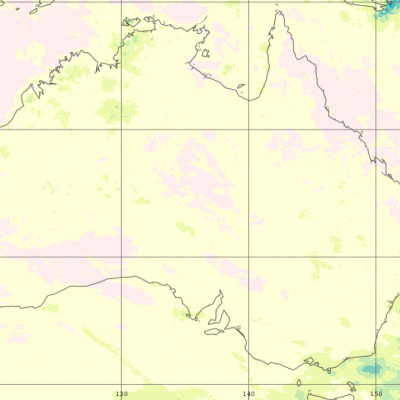
IMERG Early Run Example January 24th, 2020
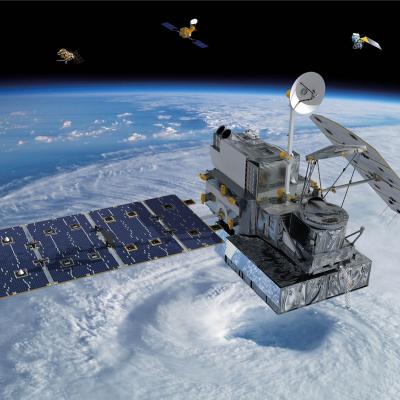
NASA’s Integrated Multi-satellitE Retrievals for GPM (IMERG) algorithm combines information from the GPM satellite constellation to estimate precipitation over the majority of the Earth's surface. IMERG is particularly valuable over areas of Earth's surface that lack ground-based precipitation-measuring instruments, including oceans and remote areas. IMERG fuses precipitation estimates collected during the TRMM satellite’s operation (2000 - 2015) with recent precipitation estimates collected by the GPM mission (2014 - present) creating a continuous precipitation dataset spanning over two decades. This extended record enables scientists to compare past and present precipitation trends, enabling more accurate climate and weather models and a better understanding of Earth’s water cycle and rainfall and snowfall patterns. IMERG also enables a wide range of applications to help communities around the world make informed decisions for disasters, disease, resource management, energy production, food security, and more.