After more than four years of drought, Californians may wonder where the current rain is coming from. Using satellites, NASA scientists have a unique view of the sources of precipitation, and how it reaches the western United States.
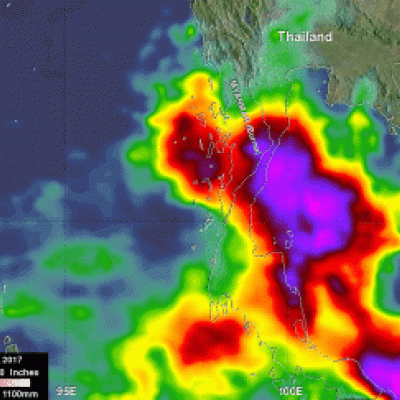
Widespread flooding has recently caused the deaths of dozens of people in southern Thailand. Frequent and persistent downpours have resulted in record rainfall totals. NASA's Integrated Multi-satellitE Retrievals for GPM (IMERG) were used to estimate the total amount of rain that fell over southern Thailand during the past week. Extreme rainfall totals of over 700 mm (27.6 inches) were shown over the Gulf of Thailand. The highest rainfall total estimates over land were greater than 500 mm (19.7 inches) on the eastern coast of the Malay Peninsula in the Bang Saphan district. Rainfall has
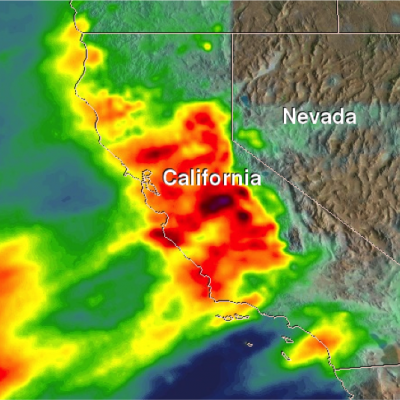
An atmospheric river (“Pineapple Express”) delivered over 5 inches of rainfall in parts of California during January 3-10, 2017 (bottom) as viewed by GPM’s IMERG data. California, which has long been suffering through a strong, multi-year drought, is finally beginning to see some much needed relief as a result of a recent series of storms that are part of a weather pattern known as the “Pineapple Express.” The Pineapple Express is known as an atmospheric river. A large, slow-moving low pressure center off of the West Coast taps into tropical moisture originating from as far south as the
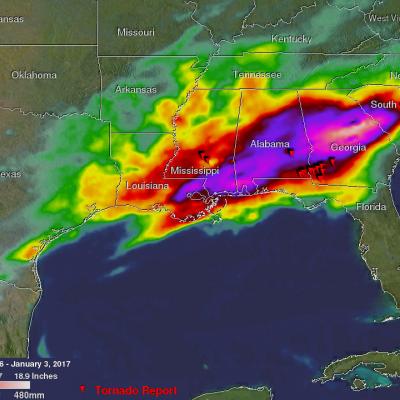
Severe thunderstorms spawned tornadoes and generated flooding rainfall over the Southeast on Monday evening. At least twelve tornadoes were reported with twisters spotted in Mississippi, Alabama and Georgia. Four deaths in Alabama and one in Florida have been blamed on this violent weather. Total rainfall was measured from December 30, 2016 through early January 3, 2017 using precipitation estimates from NASA's Integrated Multi-satelliE Retrievals for GPM (IMERG) data. IMERG data are produced using data from the satellites in the GPM Constellation, and is calibrated with measurements from the
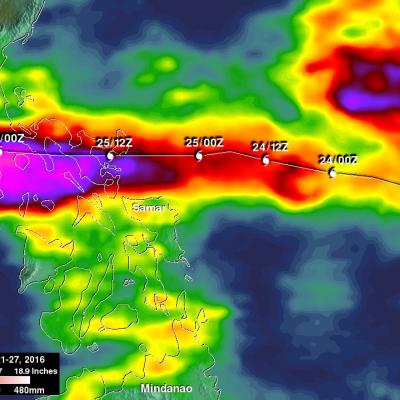
Heavy rainfall and winds from super typhoon Nock-ten caused the deaths of at least six people as it roared through the Philippines. Data generated by NASA's Integrated Multi-satellitE Retrievals for GPM (IMERG) were used to estimate the total amount of rain that super typhoon Nock-ten dropped as it approached and traveled over the Philippines. Nock-ten’s approximate locations and appropriate tropical cyclone symbols at 0000Z and 1200Z are shown overlaid in white on IMERG rainfall estimate images. This IMERG analysis shows estimated rainfall totals using NASA's IMERG data produced during the