
Tropical Storm Four Forms in the Pacific

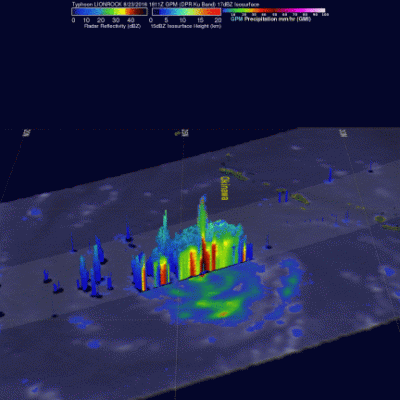
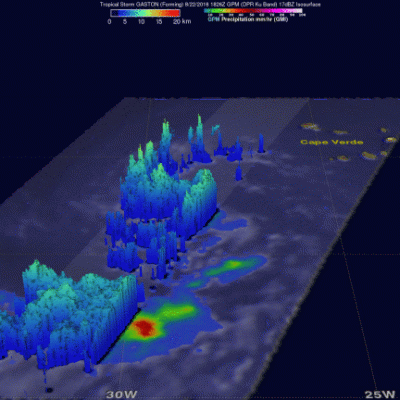
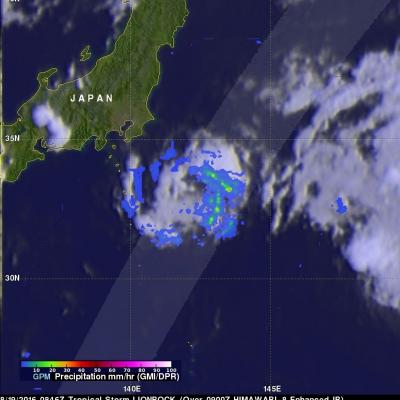
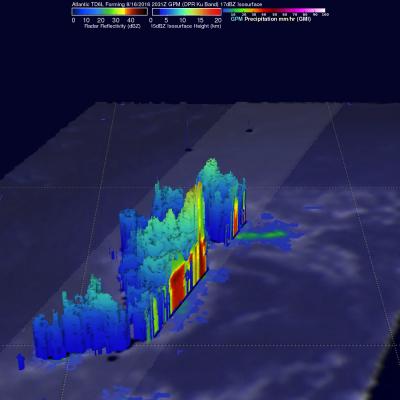
The TRMM satellite flew over rapidly forming TS04W in the western Pacific on 20 May 2011 at 0037 UTC (~10:37 AM LOCAL TIME). This daylight TRMM pass showed that the tropical cyclone was becoming much better organized. The intensifying tropical cyclone now contained several areas of heavy thunderstorms dropping rain at over 50 mm/hour (~2 inches/hour). The 3-D perspective image on the upper right shows the storm's vertical structure. TRMM's Precipitation Radar (PR) now showed that some thunderstorm towers near the center of circulation were punching up to heights of over 16 km (~9.9 miles)

Successful Completion of CDR

GPM has successfully completed the GPM Mission Critical Design Review (CDR) on December 17, 2009. During this phase of the mission the activities are focused on the implementation of science and engineering plans for the mission. The engineering activities are focused on: Core Observatory development (in-house development at Goddard Space Flight Center, Greenbelt Maryland) GPM Microwave Imager (GMI) instrument development for flight units 1&2 (at Ball Aerospace, Boulder Colorado) Dual Precipitation Radar (DPR) instrument development (JAXA- Japan) Ground Validation preparation for the field

MC3E Ideal Conditions

Diagram of ideal conditions for the MC3E campaign.
Image Caption
The MC3E ideal scenario will capture the life cycle of a storm system.

Centered at the SGP Central Facility, research aircraft will fly above and within the clouds while radar systems scan through the storm from multiple locations. At the same time, additional ground-based instruments will measure surface precipitation and wind speed.

Source: ARM Climate Research Facility