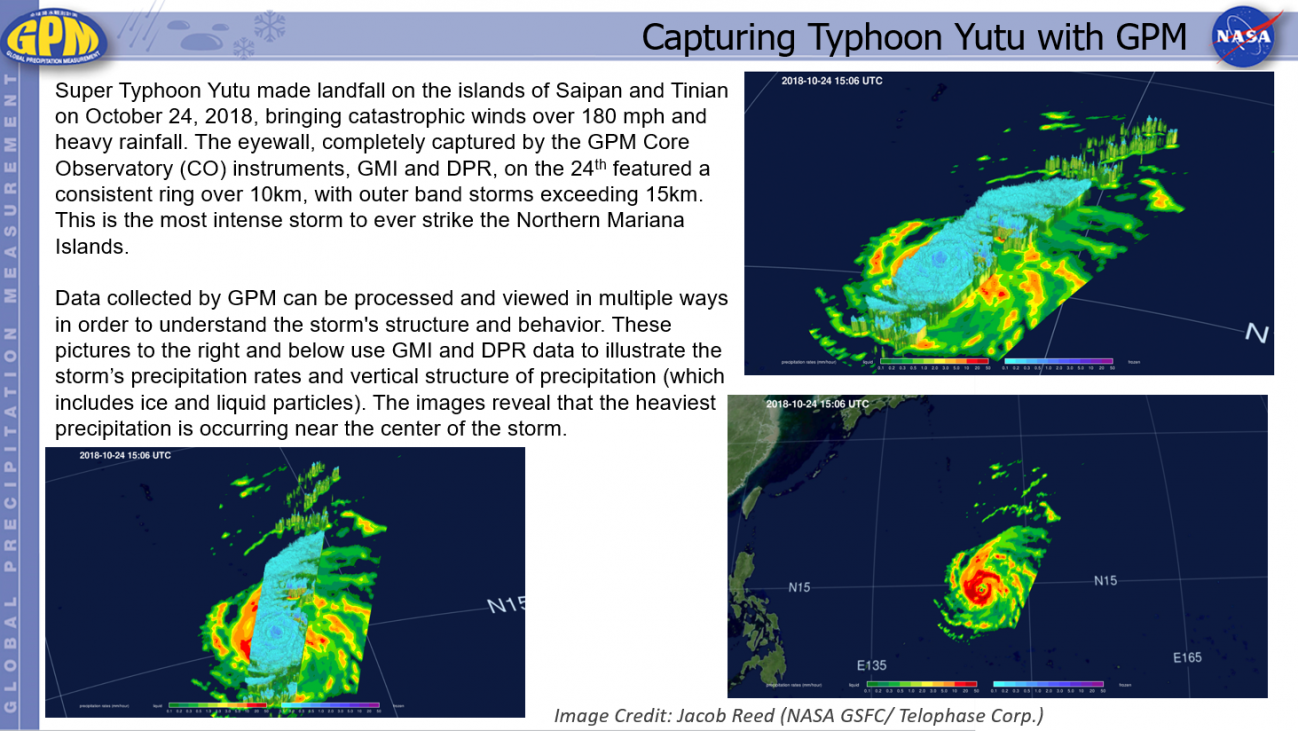
TRMM Sees More Powerful Bejisa

The TRMM satellite had an excellent view of intensifying tropical cyclone Bejisa northeast of Madagascar on December 31, 2013 at 0004 UTC. As expected, Bejisa became more powerful and had maximum sustained wind speeds estimated at 105 kts (~121 mph) when TRMM flew over. A rainfall analysis from TRMM's Microwave Imager (TMI) and Precipitation Radar (PR) instruments is shown overlaid on an enhanced infrared image from the Visible and InfraRed Scanner (VIRS). Extremely heavy rainfall in Bejisa's eye wall returned reflectivity values greater than 55dBZ to the Precipitation Radar (PR) instrument

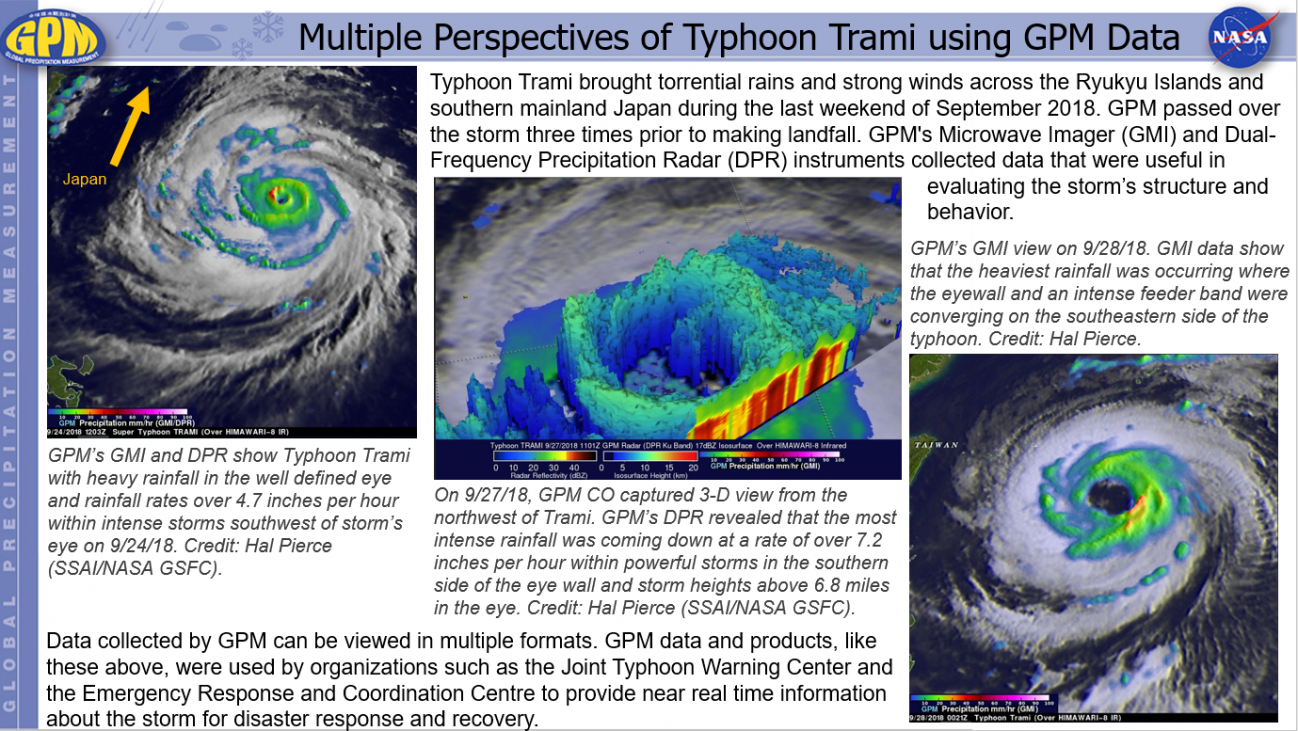
NASA & JAXA Announce Launch Date for GPM

Environmental research and weather forecasting are about to get a significant technology boost as NASA and the Japan Aerospace Exploration Agency (JAXA) prepare to launch a new satellite in February. NASA and JAXA selected 1:07 p.m. to 3:07 p.m. EST Thursday, Feb. 27 (3:07 a.m. to 5:07 a.m. JST Friday, Feb. 28) as the launch date and launch window for a Japanese H-IIA rocket carrying the Global Precipitation Measurement (GPM) Core Observatory satellite from JAXA's Tanegashima Space Center. GPM is an international satellite mission that will provide advanced observations of rain and snowfall

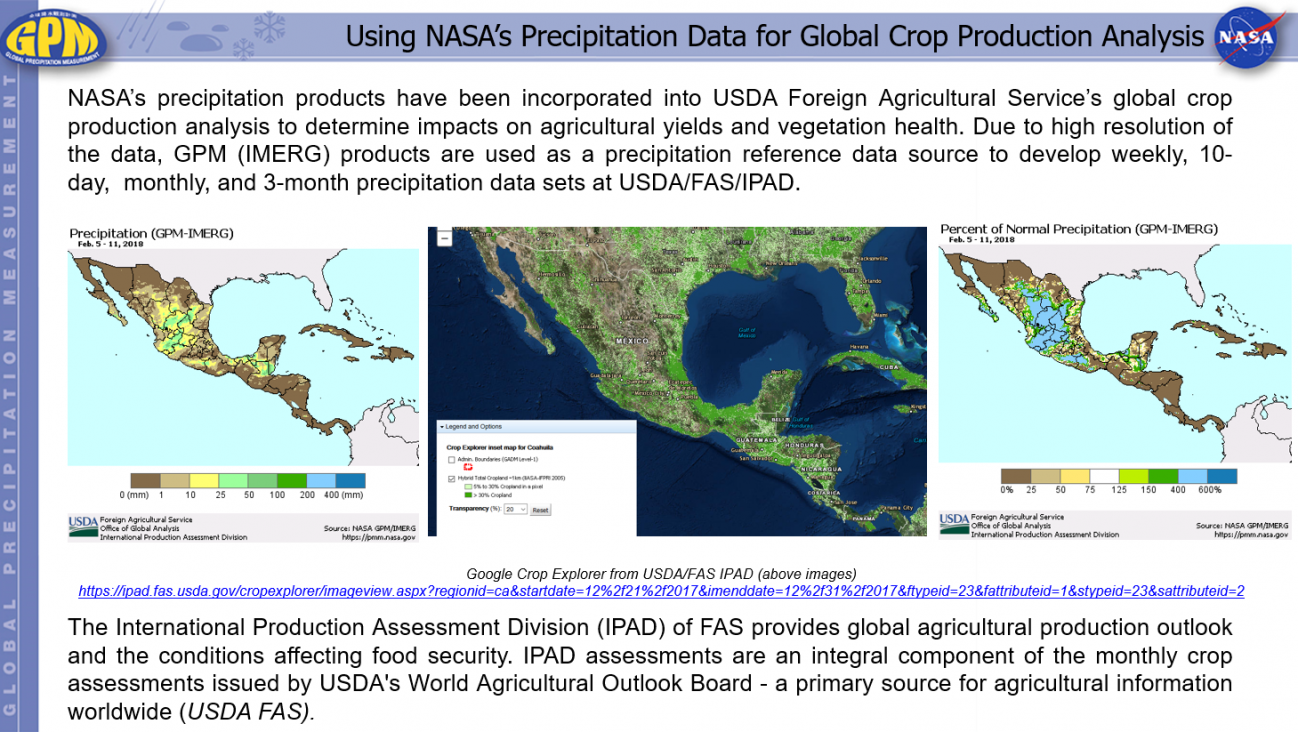
Tropical Cyclone Bejisa Near Madagascar

A tropical cyclone called Bejisa formed in the South Indian Ocean north-northeast of Madagascar on December 29, 2013 . The TRMM satellite flew over on December 30, 2013 at 0059 UTC. The image on the left shows a TRMM rainfall analysis for intensifying tropical cyclone Bejisa at that time when sustained winds were estimated to be greater than 60 kts (~69 mph). Data collected with TRMM's Microwave Imager (TMI) instrument provided better coverage of rainfall with this TRMM pass than the Precipitation Radar (PR) instrument that traveled to the northwest of Bejisa's center. The image on the right

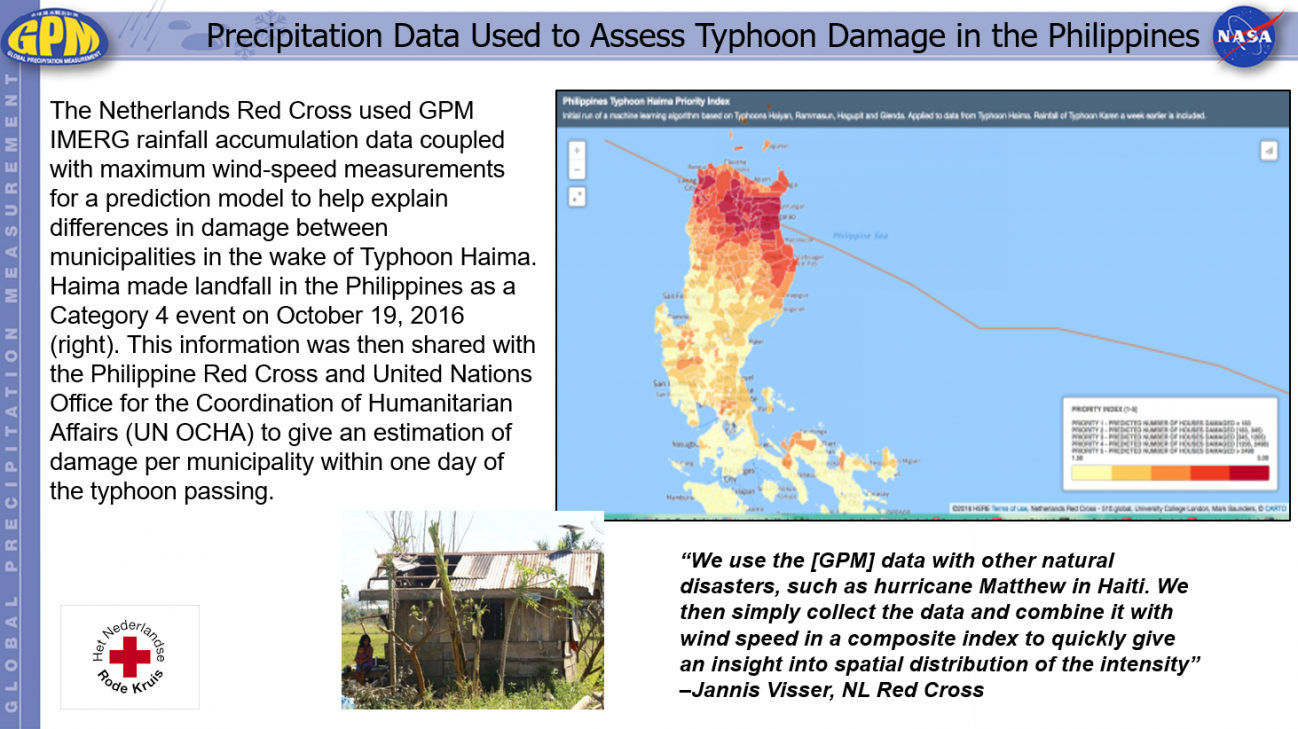
Tropical Cyclone Christine

Tropical cyclone Christine was in the South Indian Ocean close to the northwestern coast of Australia when the TRMM satellite passed over on December 30, 2013 at 1113 UTC. TRMM's Microwave Imager (TMI) and precipitation Radar (PR) instruments revealed that Christine had a well defined eye. TRMM PR found that the most intense rain was falling at a rate of over 70mm/hr (~2.8 inches) in intense bands well to the east of Christine's eye. TRMM's Microwave Imager (TMI) instrument provided good coverage of Christine's eye while TRMM's Precipitation Radar (PR) had a good look at Christine's