
Extreme Weather

Extreme weather news and updates.

GPM Flies Over Developing Tropical Storm Idai Twice
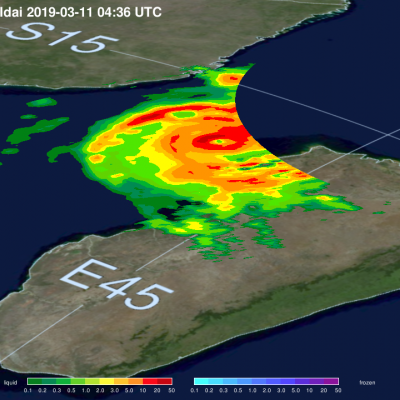
Intense Tropical Cyclone Idai started as a tropical depression on the 4th of March, 2019, off the coast of Mozambique. After making landfall over Mozambique it turned back over the Mozambique Channel and strengthened to become a tropical cyclone on the 10th of March. The GPM satellite captured the cyclone with both the GPM Microwave Imager (GMI) and the Dual-frequency Precipitation Radar (DPR) on the 11th of March at 04:36 UTC when the storm was in the middle on the Mozambique Channel. The DPR captured a well-developed eye, seen at the center of the image. It flew over the storm once again at
GPM Examines Weakening Tropical Cyclone Kenanga

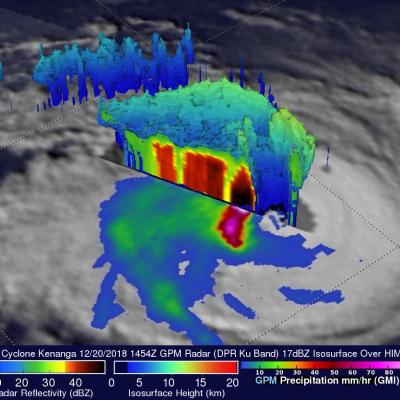
Tropical cyclone Kenanga has started to weaken as predicted. The GPM core observatory satellite had an excellent view of Kenanga on December 20, 2018 at 1454 UTC when the tropical cyclone's maximum sustained winds had decreased to about 90 kts (103.5 mph). That GPM pass also showed that the eye that was so prominent a day earlier had filled. Data collected by the satellite's Microwave Imager (GMI) and GPM's Dual-Frequency Precipitation Radar (DPR) instruments revealed through the overcast that powerful storms south of Kenanga's center of circulation were still producing very heavy rainfall

GPM IMERG Measures Hurricane Michaels Rainfall Accumulation

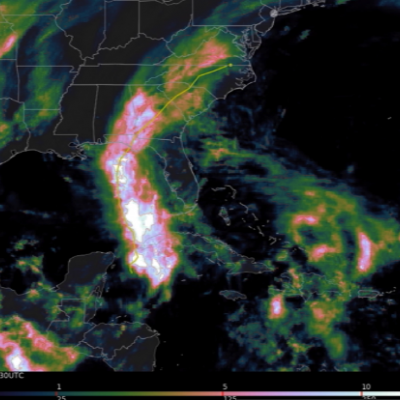
At least eleven deaths have now been attributed to deadly hurricane Micheal. Some casualties resulted not only from Micheal's destructive winds and storm surges but also from the blinding rain that Micheal produced as it battered states from Florida northeastward through Virginia. Today tropical storm Micheal is moving out over the Atlantic Ocean and has transitioned into a powerful extratropical storm. This animation using the GPM IMERG multi-satellite dataset shows the estimated total rainfall accumulation for #HurricaneMichael from 10/8/18 - 10/12/18. Learn more: https://t.co/aJuEp6o855 pic

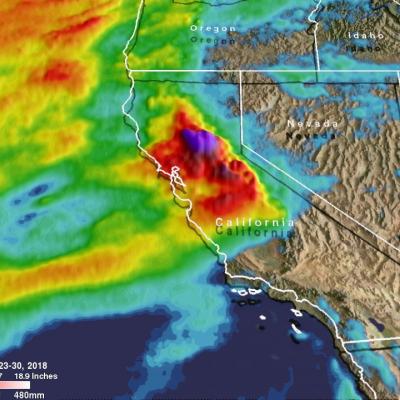
IMERG Measures Flooding Rainfall In Deadly California Wildfire Areas

Heavy precipitation has been falling in areas of California that were recently devastated by deadly wildfires. This flooding rainfall has resulted in evacuations in burn scarred areas such as Butte County where the deadly Camp Fire hit this month. Flash floods, debris flows and mudslides are now predicted in areas where deadly wildfires stripped away vegetation. On a positive note these Pacific storms are expected to dampen wildfires and replenish the Sierra Nevada snowpack. This snowpack is an important source of water for California's streams and rivers. NASA's Integrated Multi-satellitE

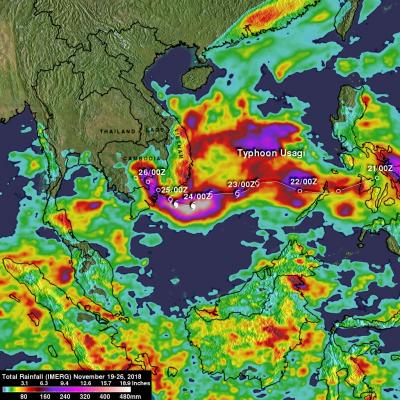
NASA's IMERG Used To Analyze Tropical Storm Usagi's Rainfall

Usagi strengthened to hurricane intensity as it approached Vietnam from the South China Sea but weakened to tropical storm intensity when coming ashore. Very heavy rainfall and damaging winds accompanied tropical storm Usagi when it hit Vietnam's southern coast. More than 350 mm (14 inches) of rainfall was reported causing widespread flooding around Ho Chi Minh City. NASA's Integrated Multi-satellitE Retrievals for GPM (IMERG) data were used to show estimates of rainfall accumulation produced by Usagi as the tropical cyclone moved across the South China Sea into Southeast Asia. This IMERG

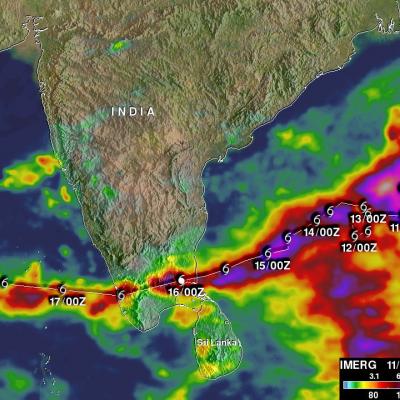
Tropical Cyclone Gaja's Rainfall Measured With IMERG

Tropical cyclone Gaja recently caused the deaths of at least 33 people in the southern India state of Tamil Nadu. Gaja's high wind and heavy rains caused landslides and building collapses. Gaja's maximum sustained winds had reached about 75kts (86 mph) when it hit southern India on Friday November 16, 2018. This meant that Gaja was the equivalent of a category one on the Saffir-Simpson hurricane wind scale. Today another tropical low is also moving over southern India and is expected to produce more heavy rainfall in the same area. NASA's Integrated Multi-satellitE Retrievals for GPM (IMERG)

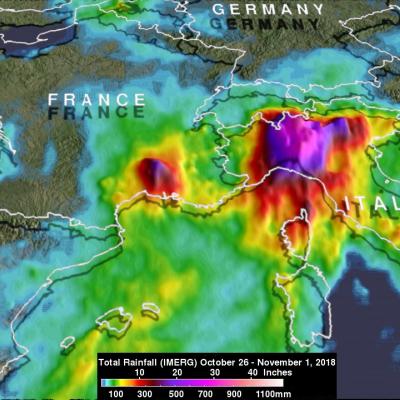
Italy's Extreme Rainfall Examined With IMERG

During the past week a strong low-pressure system moving through southern Europe battered, drenched and flooded Italy. It caused flooding, landslides and other damage to large areas of the country. The deaths of at least 11 people have been attributed to this stormy weather. High winds knocked down many trees and heavy rainfall from these storms contributed to flooding in large areas of Italy. Venice was inundated when heavy rain fell and a surge of water from the Adriatic Sea was pushed into the city by the storm's very high winds. Data from various satellites, that cover most of the globe

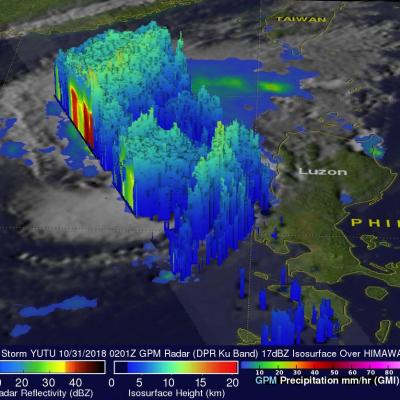
GPM Examines Weaker Tropical Storm Yutu in the South China Sea

Typhoon YUTU (known as Rosita in the Philippines) is now threatening the Philippine Island of Luzon. On October 24, 2018 YUTU devastated the northern Mariana Islands of Tinian and Saipan as a super typhoon. One death has been attributed to the typhoon in the Marianas with many structures including schools and hospitals being destroyed. Typhoon YUTU weakened as it moved toward the Philippines and had maximum sustained winds of about 90 kts (103.5 mph) when the GPM core observatory satellite passed above the Philippine Sea on October 29, 2018 at 0212 UTC. This rainfall analysis was developed
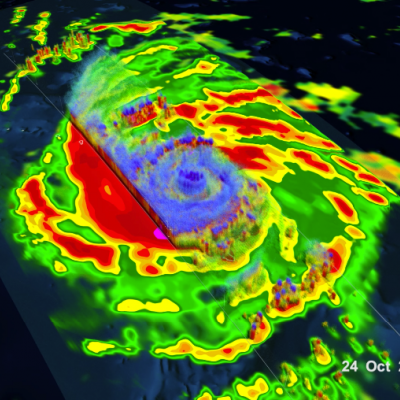
GPM Catches Typhoon Yutu Making Landfall
NASA's GPM Core observatory satellite captured an image of Super Typhoon Yutu when it flew over the powerful storm just as the center was striking the central Northern Mariana Islands north of Guam. Early Thursday, Oct. 25 local time, Super Typhoon Yutu crossed over the U.S. commonwealth of the Northern Mariana Islands. It was the equivalent of a Category 5 hurricane. The National Weather Service in Guam said it was the strongest storm to hit any part of the U.S. this year. Download this video in high resolution from the NASA Goddard Scientific Visualization Studio Download video without...

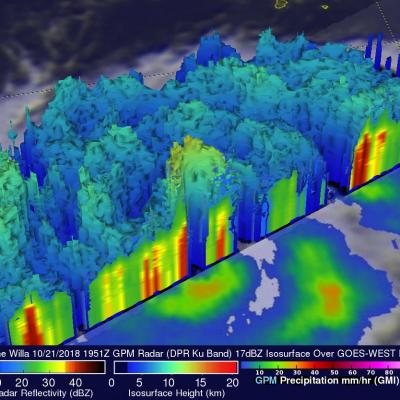
Dangerous Hurricane Willa Probed By GPM Satellite

Hurricane Willa was moving northward toward the western coast of Mexico when the GPM core observatory passed above on October 21, 2018 at 1:51 PM MDT (1951 UTC). The hurricane had maximum sustained winds of about 95 mph (109 kts). Since then Willa has rapidly intensified and today has winds of 155 mph (135 kts) making it a dangerous category four on the Saffir-Simpson hurricane wind scale. GPM's Microwave Imager (GMI) and Dual-Frequency Precipitation Radar (DPR) instruments collected data showing that hurricane Willa and feeder bands were producing heavy rainfall over a large area. The